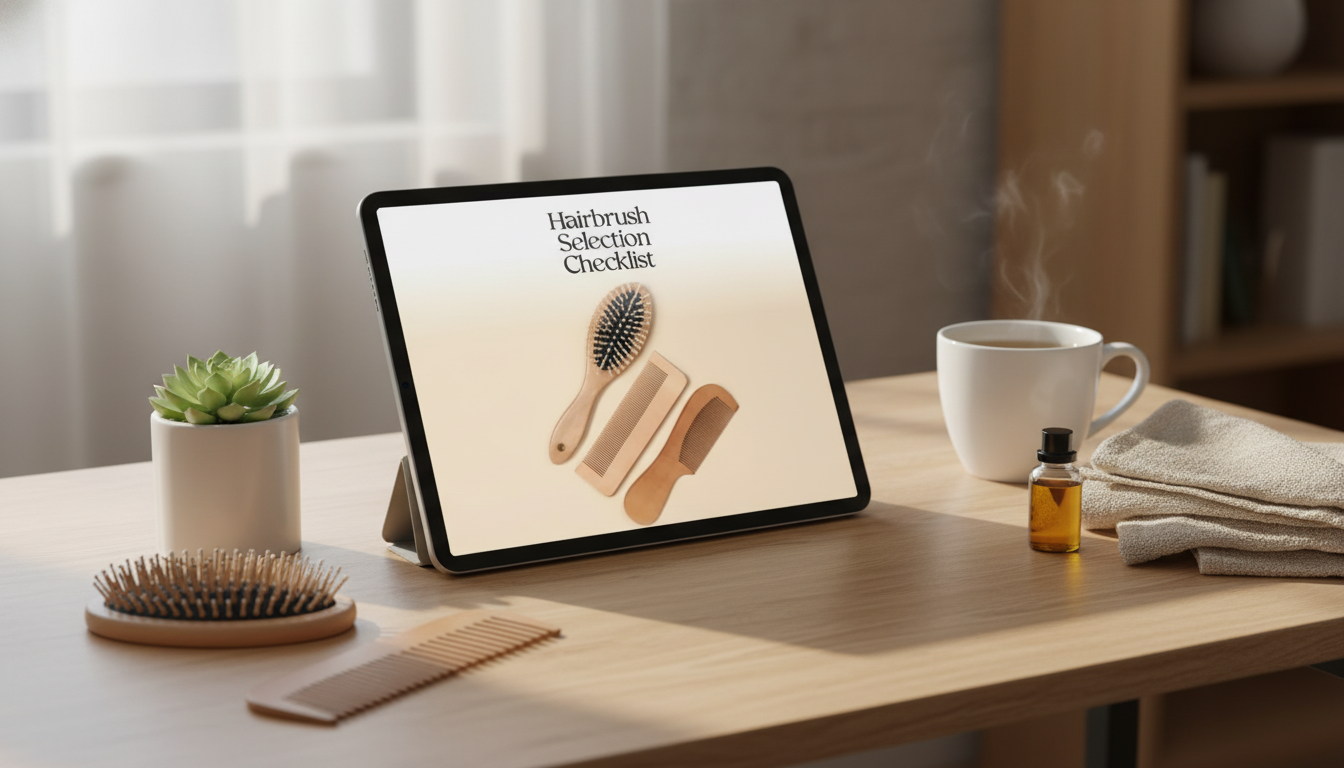
Choosing the right hairbrush can make detangling easier, reduce breakage, and improve styling results—if the brush matches your texture, density, and goals. A simple checklist keeps the decision consistent from wash day to heat styling day, so you’re not guessing (or yanking through tangles) when you’re in a hurry.
If you want a ready-to-print version you can keep by your vanity, the Hairbrush Selection Checklist (digital download) makes it easy to repeat the same “pick goal → pick tool → use notes” routine every week.
Before you grab a brush, take one minute to scan what your hair needs today. This quick check prevents using a high-tension tool on fragile strands or using a smoothing brush when your real goal is volume.
When hair is compromised (bleach, frequent heat, or noticeable shedding), prioritize gentle detangling and low tension over “strong grip.” If you’re unsure what gentle basics look like, the American Academy of Dermatology shares practical hair-care guidance here: Hair care basics (AAD).
Most routines don’t need a dozen tools—just the right tool for the job. Here’s what each brush type does best, so you can build a small, useful lineup.
If breakage is already showing up as rough ends or shorter “flyaway” pieces, it can help to review common causes and prevention tips (including handling and tension). See: Cleveland Clinic: Hair breakage.
Use this as a fast shortlist, then confirm based on scalp sensitivity and your styling method (air-dry vs. blow-dry). If hair is fragile, choose the gentler tool for daily use and save higher-tension styling for occasional sessions.
| Hair type/need | Best tools | Use notes |
|---|---|---|
| Fine, straight hair (breakage-prone) | Boar bristle or mixed bristle; gentle detangler | Avoid aggressive teasing; use light pressure and start at ends |
| Thick, straight or wavy hair | Paddle brush; detangling brush | Section hair to reduce pulling; use wider spacing if snagging |
| Wavy hair (frizz control) | Paddle brush for smoothing; wide-tooth comb for wet detangle | Comb in shower; brush after blow-dry if aiming for smooth finish |
| Curly hair (definition) | Wide-tooth comb; finger detangle; curl-friendly detangler | Detangle with slip (conditioner); avoid dry brushing to prevent frizz |
| Coily hair (shrinkage + fragility) | Wide-tooth comb; detangle tool designed for coils | Work in small sections; detangle from ends upward with product |
| Blowout goals | Round brush; paddle brush for finish | Pick round size by length; use heat protectant and controlled tension |
| Sensitive scalp | Soft-tip bristles; cushioned paddle | Short sessions; avoid stiff pins and harsh tugging |
| Extensions/wigs | Loop brush or extension-safe detangler | Hold hair at the base to reduce stress on bonds/wefts |
The goal isn’t to overthink—it’s to remove friction from your routine. A one-page checklist is especially helpful if different days require different tools (wash day vs. blowout vs. protective styling).
For an easy, ready-to-print option, the Hairbrush Selection Checklist (digital download) is designed to be used repeatedly—so your brush choice stays consistent even when your hair condition changes.
If your main “finish” goal is a smooth, bouncy blowout, pair the right round brush size with controlled heat. For curling and shaping beyond a classic blowout, a tool like the 32mm Ceramic Auto Hair Curler with Adjustable Temperature can help you keep results consistent while adjusting temperature for your hair’s condition.
If you want to build a simple grab-and-go routine, start with the Hairbrush Selection Checklist (digital download), then add notes like “detangle in shower only” or “heat styling days only” next to each tool you own.
Sometimes, but wet hair is more elastic and can snap more easily. For curls/coils, a wide-tooth comb or gentle detangling brush with conditioner and lots of slip is usually safer; for straight hair, detangle gently in sections and avoid yanking.
A mixed bristle brush or a soft paddle can smooth the outer layer while keeping movement. Use light pressure, focus on the surface rather than repeatedly brushing the whole head, and consider a round-brush blow-dry for controlled volume.
Remove shed hair after every use and wash weekly if you use styling products (or every 2–4 weeks otherwise). Replace your brush when bristles bend, tips go missing, the cushion cracks, or it starts snagging more than it used to.








Leave a comment