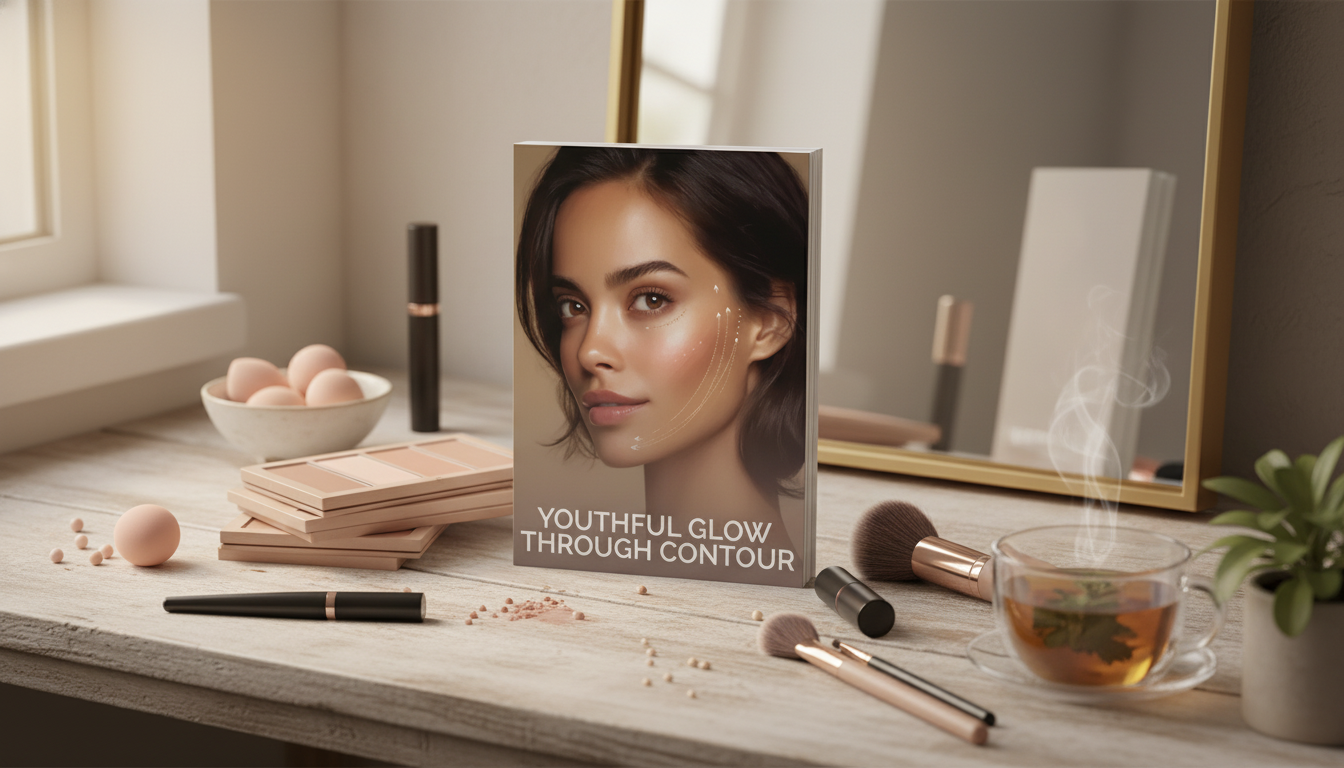
A youthful-looking contour is less about sharp lines and more about subtle lift, softened shadows, and light placed where the face naturally catches it. The goal is a fresh, rested look that still resembles real skin—think “gently defined,” not “carved.” Below is a simple, repeatable routine built around four actions: shade, lift, brighten, and blend.
Youthful contour focuses on creating the impression of lift, not changing your face into a new one. The difference usually comes down to placement and softness.
Before placement, get the tone and texture right. A “contour” shade should mimic a real shadow—generally neutral-to-cool—rather than pulling orange like a bronzer.
| Need | Best option | Why it helps a youthful look |
|---|---|---|
| Dry or textured areas | Cream contour + damp sponge | Avoids powder cling; edges stay soft |
| Oily T-zone | Light powder contour + fluffy brush | Controls shine without heaviness |
| Beginner control | Sheer cream in thin layers | Easy to correct; less risk of harsh stripes |
| Soft definition | Neutral/cool undertone | Reads like natural shadow instead of bronzer |
For a smoother canvas, keep skincare simple and consistent. The American Academy of Dermatology’s skin care basics are a solid reference for gentle cleansing and moisturizing. In the daytime, sunscreen helps protect texture and tone over time; the FDA’s sunscreen guidance explains how to choose and use it well.
Use this order so the face stays light in the center, with gentle structure around the perimeter.
Apply a thin, even layer of foundation or skin tint. Spot-conceal where needed instead of piling on coverage—extra layers can make blending harder and emphasize fine lines.
Place contour slightly above the natural hollow, starting near the top of the ear and stopping around mid-cheek. Keep it away from the mouth area; dragging contour too far forward can read as heaviness.
Add a small sweep at the outer forehead/temple to visually lift and balance the cheek contour. This “frame” effect often looks more natural than heavy shading in the center of the forehead.
Lightly shade just under the jawline near the back half (closer to the ear). Keep the front of the chin clean so the lower face stays bright and fresh.
Use minimal product. Shade close to the bridge and blend outward; keep the tip brighter to avoid a droopy effect. If you’re new to nose contour, do less than you think—most “too obvious” results come from over-application.
| Goal | Request to use | What to look for in the reply |
|---|---|---|
| Everyday lifted cheeks | Create a soft, lifted contour and blush placement plan for a beginner with a round face and neutral undertone. Keep it subtle and natural. | Higher cheek placement, minimal jaw shading, softened edges |
| Photo-friendly definition | Design a step-by-step contour routine for a natural-looking sculpt that won’t look harsh in photos. Include blending tips and where to avoid heaviness. | Controlled depth, strategic brightening, set only where needed |
| Quick 5-minute routine | Give a 5-minute contour routine for beginners using only cream products and a sponge. Focus on youthful lift and fresh skin. | Fewer steps, small product amounts, clear placement cues |
Place cheek contour slightly higher than your natural hollow, add a light touch at the temples, and keep jaw shading minimal (mainly toward the back). Keep the center of the face brighter, and blend upward to reinforce lift.
Sheer cream contour is usually easier for beginners because it blends smoothly and is simpler to correct. Powder can work well for oily skin or after setting your base—just use a light hand and a fluffy brush to avoid patchiness.
Start with hydrated skin, keep your base thin, and use minimal product in layers with lots of blending. Set only where you crease, avoid heavy powder stacking on textured areas, and keep the strongest depth near the hairline so the center stays soft.










Leave a comment