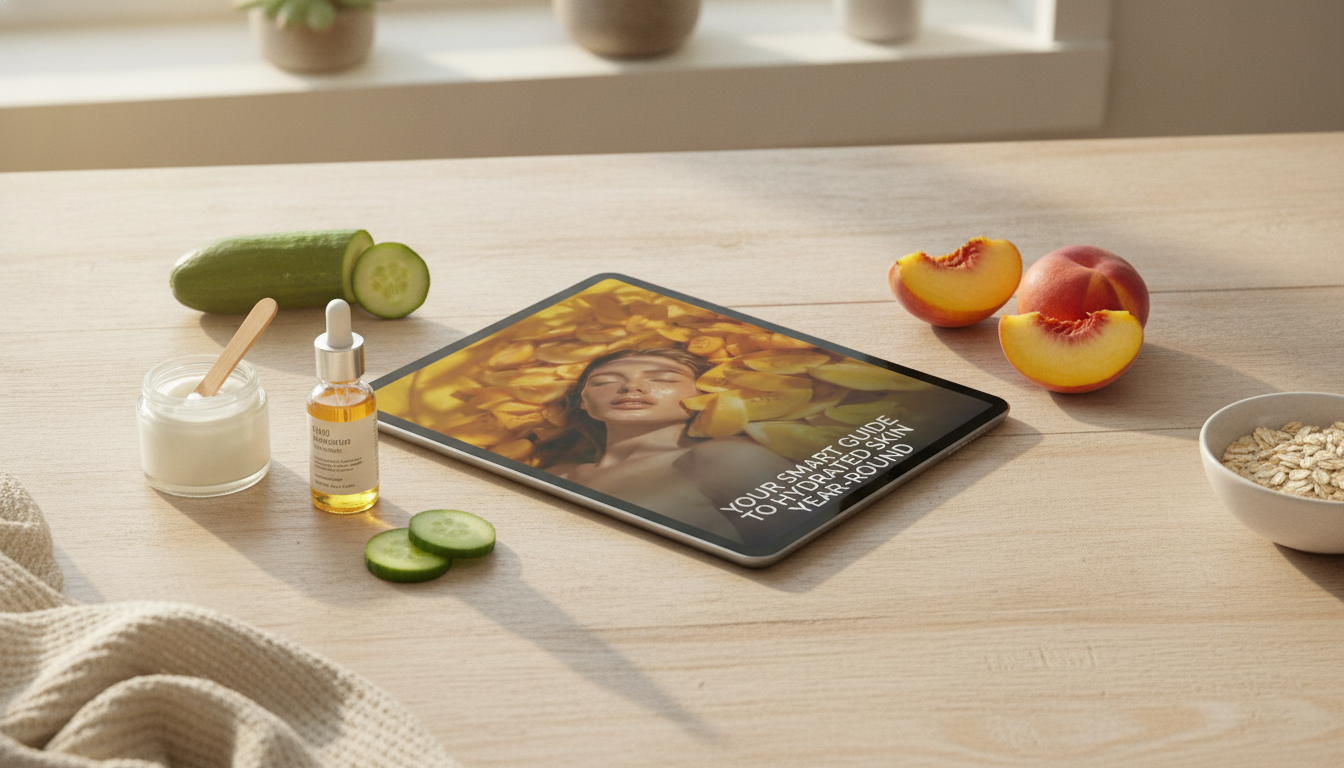
Skin often feels “fine” until the weather shifts—then tightness, flaking, or surprise oiliness shows up fast. Hydration is less about one miracle cream and more about adjusting cleansing, humectants, moisturizers, and protection as temperature, humidity, wind, and indoor heating change. Below is a practical, season-by-season framework to keep the skin barrier comfortable and glowing all year. For more guidance, see How to Spring Clean Your Skin Care for Healthier Skin.
Hydration refers to water content inside the skin, while moisture is what helps keep that water from evaporating—usually via emollients (skin-softening oils) and occlusives (protective sealants). When the skin barrier is weakened, water escapes more easily (transepidermal water loss), which can lead to tightness, sensitivity, and rough texture over time. The Cleveland Clinic explains TEWL and how barrier stress affects skin comfort and function. For further reading, see Step By Step Guide To Make Your Skincare Routine For All-Season.
Dehydration doesn’t always look like obvious dryness. Common signs include tightness after cleansing, makeup clinging to patches, a dull tone, and fine lines that look more pronounced—even if your T-zone gets oily later. A steady baseline strategy works best: gentle cleanse, add water-binding ingredients, seal with the right moisturizer for the season, and wear sunscreen daily. For general dry-skin tips and triggers, see guidance from the American Academy of Dermatology Association.
| Season | What changes | Best routine tweaks | Go-to ingredients |
|---|---|---|---|
| Winter | Low humidity + indoor heat increases water loss | Short lukewarm showers; creamy cleanser; layer hydrating serum; richer moisturizer; consider occlusive at night | Glycerin, hyaluronic acid, ceramides, petrolatum, squalane |
| Spring | Fluctuating temps + pollen irritation | Keep barrier-focused moisturizer; add soothing toner/serum; avoid over-exfoliating during flare-ups | Panthenol, colloidal oatmeal, ceramides, niacinamide |
| Summer | Heat + sweat + higher UV exposure | Gel-cream moisturizer; cleanse gently after sweating; reapply sunscreen; add lightweight hydrators | Glycerin, aloe, niacinamide, lightweight ceramides |
| Fall | Humidity drops; skin may feel suddenly tight | Start swapping to richer textures; reduce strong actives if dryness appears; add overnight mask 1–2x/week | Ceramides, urea (low %), squalane, peptides |
If your face feels tight right after washing, choose a low-foam, fragrance-light cleanser and keep water lukewarm. Consider cleansing once daily (night) and just rinsing in the morning if your skin tends to get reactive in colder months.
Apply a humectant step (like glycerin or hyaluronic acid) onto lightly damp skin so it can bind water more effectively. Mist sprays can feel great, but if you don’t seal them in afterward—especially in low humidity—skin can end up feeling drier.
Match texture to climate: gel-creams are comfortable in humidity; richer creams and balms make more sense when air is dry or windy. Look for barrier-supporting lipids such as ceramides to help skin feel steadily less “touchy” over time.
When the barrier feels compromised, a thin occlusive layer at night (often just on dry zones) can reduce water loss and calm flaking faster than piling on multiple new products.
Sunscreen is a hydration tool in disguise: UV and heat can worsen barrier stress and lead to chronic dehydration. Keep it daily, year-round.
Winter dehydration is a mix of low humidity, wind, and indoor heat. If morning cleansing triggers tightness, switch to a gentler cleanser or cleanse only at night. Layer hydration quickly: apply a serum first, then moisturizer, ideally within about a minute of cleansing to reduce water loss while skin is still slightly damp.
Prioritize barrier lipids—ceramides and similar replenishing ingredients can reduce that “paper-dry” feeling over time. For stubborn flakes, apply a tiny amount of occlusive only where needed (cheeks, corners of the mouth) at night. Avoid stacking too many exfoliants in winter; dryness plus aggressive acids can spiral into redness and sensitivity.
Spring is tricky because one week can feel damp and mild, the next windy and dry. Keep two moisturizer options on hand: one lighter, one richer. When allergies flare and skin feels sensitized, soothe first—panthenol and colloidal oatmeal are especially helpful before you add new actives or increase exfoliation.
Oil and water are different: skin can produce extra sebum while still lacking water, especially when the barrier is stressed and water escapes faster. Use gentle cleansing, apply humectants to damp skin, and seal with a lightweight moisturizer to balance comfort without heaviness.
Yes. Slightly damp skin can help humectants bind water more effectively, and moisturizer helps seal it in. If you mist, always follow with moisturizer—especially in dry air—so that added water doesn’t evaporate too quickly.
Keep washing short and lukewarm, switch to a creamy cleanser, and layer a humectant plus a ceramide-rich moisturizer. At night, add a thin occlusive on flaky areas and reduce over-exfoliation until the barrier feels calm again.










Leave a comment