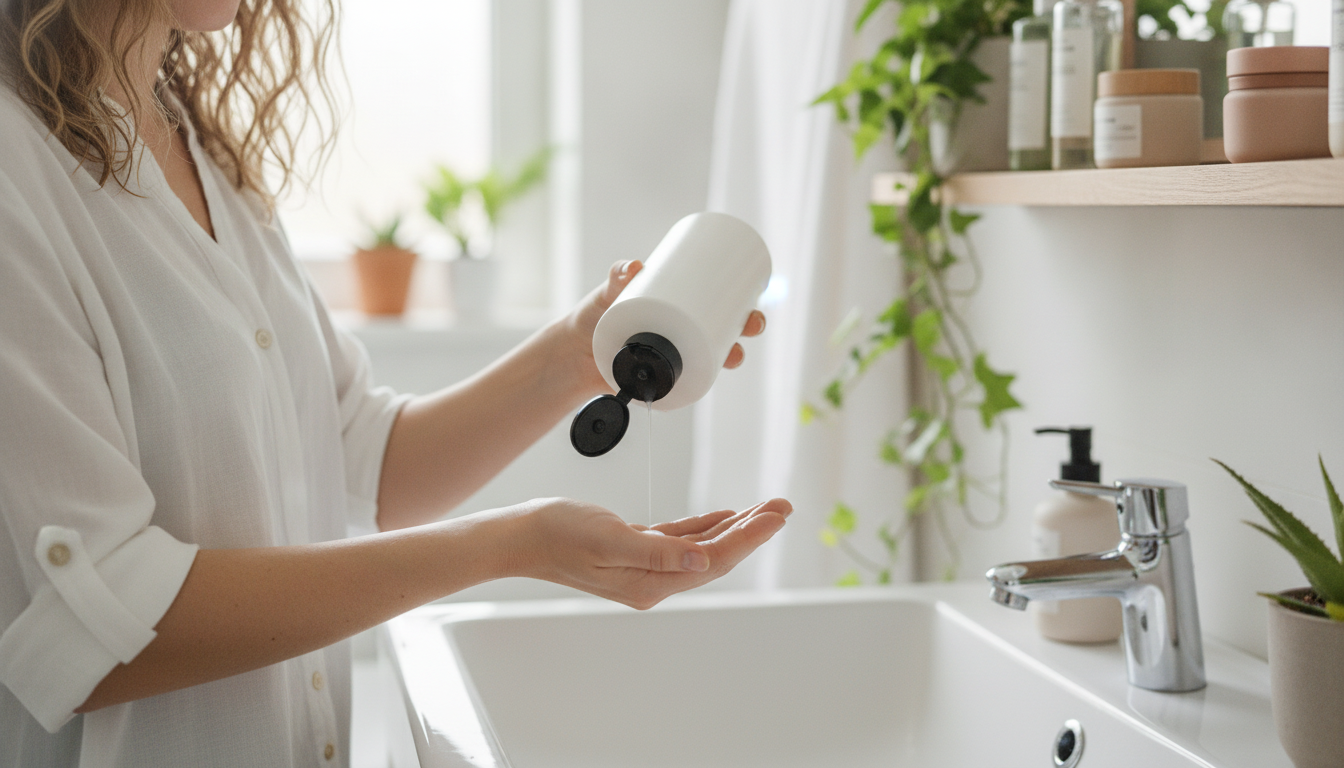
A shampoo that makes one person’s hair feel airy and clean can leave someone else with dryness, buildup, or flat roots. The easiest way to choose well is to do a quick two-part check—scalp plus strands—then match that to a cleanser type, a few ingredient “green flags,” and a wash routine that keeps hair balanced between clean and conditioned. For more guidance, see Shampoo and Conditioners: What a Dermatologist Should Know?.
If your scalp and strands disagree (classic combo: oily roots + dry ends), choose shampoo for the scalp and treat the ends separately with conditioner, a mask, or an occasional mid-lengths-only co-wash on alternate days. For further reading, see Through Thick and Thin: The Best Shampoo for Each Hair Type.
Also note lifestyle factors that can shift your best shampoo match: frequent workouts, hard water, heat styling, swimming/chlorine, and heavy styling products.
| Scalp/Hair Profile | Best Shampoo Type | Helpful Ingredients/Features | Common Pitfalls | Routine Tip |
|---|---|---|---|---|
| Oily scalp, fine hair | Gentle daily or volumizing | Lightweight cleansing, minimal heavy conditioners | Over-conditioning at roots, skipping rinse | Condition mid-lengths to ends only |
| Oily roots, dry ends | Gentle cleanser + occasional clarifying | Balanced cleansing, softening agents for ends | Using strong clarifier too often | Clarify 1–2x/month; deep condition ends |
| Dry scalp, dry or coarse hair | Moisturizing/hydrating | Humectants and conditioning agents; low irritation | Hot water, harsh cleansers | Wash less often; focus shampoo on scalp, gentle massage |
| Sensitive/itchy scalp | Gentle, fragrance-minimized; medicated if flakes present | Fewer irritants; follow medicated directions | Switching products too frequently | Introduce one new product at a time |
| Wavy/curly hair with frizz | Moisturizing; low-friction cleansing | Slip, hydration, curl-friendly conditioning | Rough towel drying, over-shampooing | Detangle with conditioner; blot with microfiber towel |
| Coily hair or high shrinkage | Moisturizing; consider alternating with co-wash | Rich conditioning, gentle cleansing | Insufficient hydration between washes | Use leave-in + sealant; protect at night |
| Color-treated or bleached hair | Color-safe + moisturizing | Milder cleansing; strengthening support | Too-hot water, frequent clarifying | Use lukewarm water; clarify only when needed |
| Heavy product use or hard water | Clarifying (periodic) + gentle in-between | Chelating/clarifying features; thorough rinse | Clarifying too often causing dryness | Clarify every 2–4 weeks; follow with deep conditioner |
If you’re dealing with ongoing dandruff-like flakes or scalp itch, medicated shampoos can help—but they work best when used exactly as directed (often needing a few minutes of contact time). For additional guidance, see the American Academy of Dermatology’s tips on dandruff care (AAD: how to get rid of dandruff) and basic haircare practices (AAD: hair care basics). If symptoms are persistent or severe, a clinician can help rule out scalp conditions that need targeted treatment.
Base it on scalp oiliness, activity level, and product use: oily scalps or frequent workouts often do better with more frequent washing, while dry scalps and coarse hair may need fewer wash days. If ends get dry before roots get oily, focus shampoo on the scalp and protect ends with conditioner or a mask.
Clarifying shampoos are designed to remove heavier buildup (styling residue, oils, and sometimes hard-water minerals), while regular shampoos are milder for routine cleansing. Many people do best clarifying every 2–4 weeks (or sooner with heavy styling) and following with a deeper conditioner.
No—issues usually come from overly strong cleansers or washing too often without enough conditioning. A moisturizing shampoo focused on the scalp, plus generous conditioning (and an occasional co-wash if needed), keeps curls and coils clean without feeling stripped.








Leave a comment