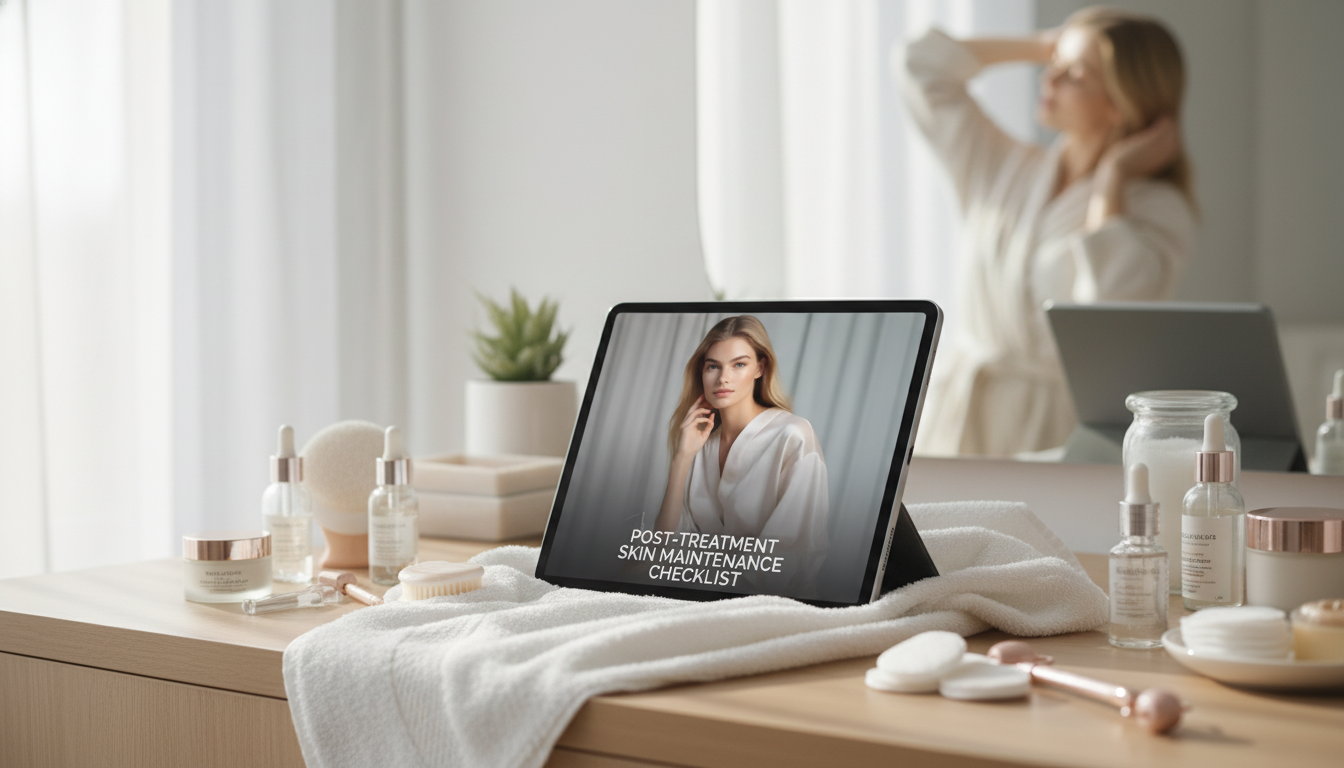
Post-Treatment Skin Maintenance Checklist: A Simple Aftercare Planner for Lasting Results
Professional skin treatments can deliver noticeable improvements, but the days and weeks afterward often determine how long those results last. A structured checklist removes guesswork, supports barrier recovery, and helps keep routines consistent while skin is healing and adjusting.
Why aftercare matters after professional treatments
Right after a peel, laser session, microneedling, or even a “gentle” resurfacing facial, your skin can behave differently than usual. That doesn’t mean something is wrong—it often means your barrier is recalibrating and needs a calmer, more protective routine.
- Freshly treated skin is more reactive. Barrier support and strict sun protection help reduce the risk of irritation and uneven tone.
- Consistency beats complexity. Repeating a small set of safe steps typically preserves results better than rotating lots of products.
- Tracking changes helps you adjust early. Noting tightness, flaking, or sensitivity can show when to simplify—or when it’s time to contact your provider.
- Recovery windows vary. A flexible planner is safer than a one-size routine, since downtime depends on treatment intensity and skin type.
For general guidance on caring for irritated or sensitized skin, the American Academy of Dermatology Association is a reliable reference point. For sunscreen basics and what “broad-spectrum” means, see the U.S. Food & Drug Administration.
The core checklist: what to do every day
When in doubt, return to a “quiet routine”: gentle cleansing, plain moisturizing, and dependable SPF. The goal is to protect the work you just paid for—without accidentally triggering inflammation.
- Cleanse gently: Use lukewarm water and a non-stripping cleanser; skip scrubbing, cleansing brushes, and devices while sensitivity is present.
- Moisturize for barrier support: Choose bland, fragrance-free hydration; reapply to tight areas as needed.
- Protect with sunscreen daily: Broad-spectrum SPF 30+ every morning; reapply when outdoors or near windows for extended periods.
- Hands off: Don’t pick flakes or “help” peeling skin. Let shedding happen naturally to reduce lingering marks.
- Keep it minimal: Pause strong actives unless your provider cleared them (retinoids, exfoliating acids, benzoyl peroxide, high-strength vitamin C).
- Hydration and sleep: Adequate water intake and steady sleep support recovery and help skin look calmer faster.
Daily post-treatment routine planner (adjust timing to provider instructions)
| Time |
Step |
What to use |
Notes to track |
| Morning |
Gentle cleanse (or rinse) |
Mild cleanser or water |
Stinging? Tightness? |
| Morning |
Moisturize |
Simple barrier-support moisturizer |
Dry patches? |
| Morning |
Sun protection |
Broad-spectrum SPF 30+ |
Outdoor time planned? Reapply? |
| Midday |
Reapply SPF (if needed) |
SPF 30+ / tinted SPF |
Redness increasing? |
| Evening |
Gentle cleanse |
Mild cleanser |
Any burning with cleanser? |
| Evening |
Moisturize/repair |
Moisturizer; optional occlusive if approved |
Flaking level 0–5 |
| Anytime |
Do/avoid list |
Avoid heat, scrubs, heavy fragrance |
Triggers noticed? |
Treatment-aware adjustments (use the safest baseline when unsure)
Always prioritize your provider’s specific instructions, but these general adjustments help you avoid common setbacks.
- Chemical peels: Lean hard into moisture and sun avoidance; don’t force exfoliation or remove peeling skin.
- Microneedling: Avoid makeup and sweaty workouts for the recommended period; focus on gentle hydration and strict SPF.
- Laser and light-based treatments: Keep skin cool, protected from sun, and free of irritating actives until cleared.
- Hydrafacial and gentle resurfacing: Results last longer with steady hydration, daily SPF, and slowly reintroduced actives.
- Injectables: Follow guidance about heat, exercise, and massage; keep skincare gentle around treated areas.
What to pause—and when to reintroduce actives
If your skin feels tender, looks shiny-tight, or stings with basics, it’s usually not the moment to “push results” with stronger products.
Lifestyle habits that protect results
- Sun strategy: Hats, shade, sunglasses, and window awareness strengthen what sunscreen can do. For a deeper overview, the Mayo Clinic’s sun protection guide is a helpful read.
- Heat and sweat: Hot yoga, saunas, and long hot showers can worsen redness early in recovery.
- Pillowcase hygiene: Fresh pillowcases can reduce irritation and breakouts during the first week post-treatment.
- Makeup timing: If permitted, choose non-irritating formulas; remove gently and avoid heavy friction.
- Photo tracking: Weekly photos in similar lighting can show trends without the stress of daily overchecking.
When to contact a professional
A printable-style tool to keep routines consistent
FAQ
How long should aftercare be followed after a professional skin treatment?
Most aftercare routines are followed for a few days to a few weeks, depending on the treatment and how quickly your barrier settles. Even if peeling or redness looks “done,” sensitivity can linger—so follow your provider’s timeline and stay conservative if your skin still stings or feels tight.
When can active ingredients like retinoids or exfoliating acids be used again?
Wait until skin feels calm and intact (no stinging with gentle cleanser or moisturizer), then reintroduce one active at a time slowly. Exact timing varies by treatment type and strength, so your clinician’s instructions should be the final word.
What are the most common mistakes that reduce results after treatments?
The biggest issues are over-exfoliating, skipping daily sunscreen, picking at flaking skin, using fragranced/harsh products, returning to heat and heavy sweat too soon, and changing too many products at once.
Recommended for you











Leave a comment