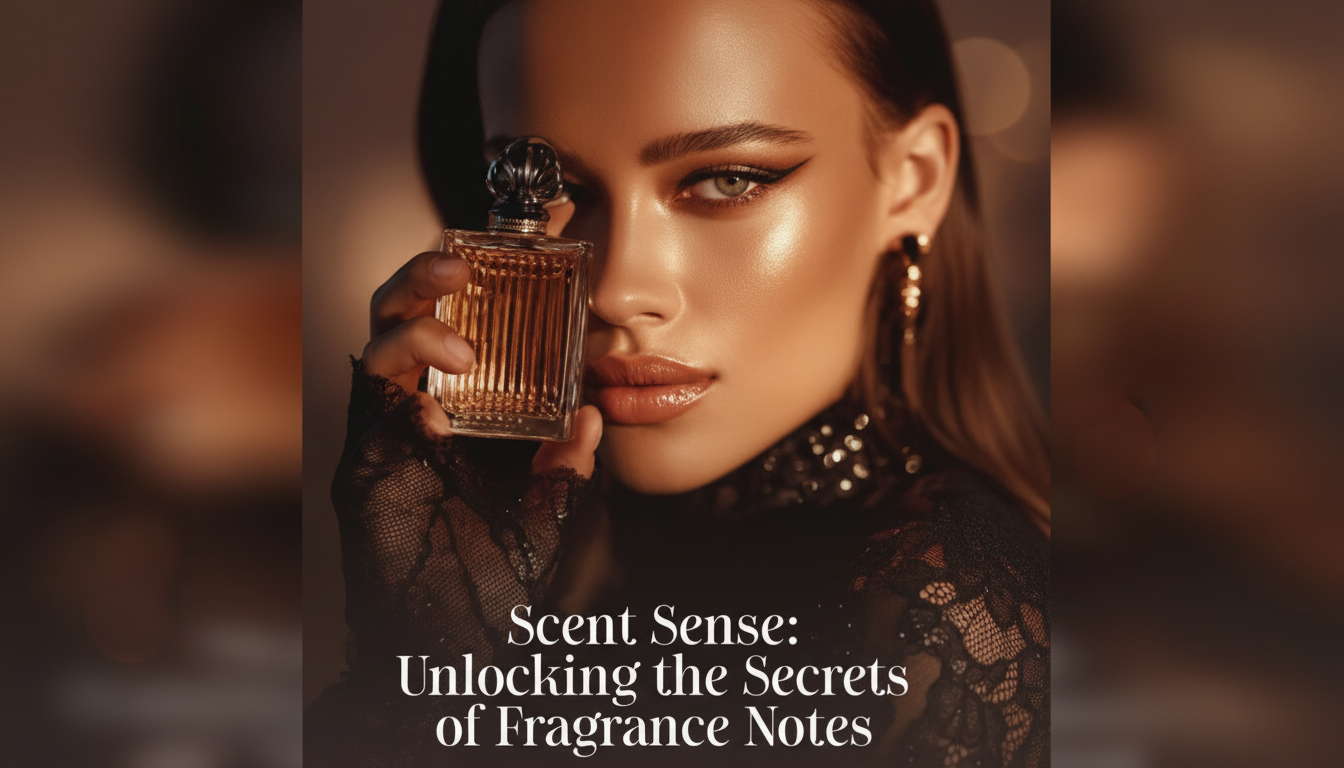
Fragrance can feel mysterious until the building blocks start to make sense: notes, families, and the way a scent changes from first spray to dry-down. Once those basics click, it becomes much easier to choose what you’ll actually enjoy wearing—and to explain what you like (or don’t) without guessing. Below is a practical guide to perfume structure, how to read descriptions, and a simple way to train your nose so every new sample teaches you something. For more guidance, see Train Your Nose: Learn to Understand Fragrances & Recognize Notes.
Perfume “notes” aren’t a literal ingredient list in the way a recipe is. They’re a structured way to describe how a scent unfolds as different aroma materials evaporate and bloom over time. For further reading, see How to Train Your Nose for Perfume – Maple Prime.
Top notes show up in the first minutes after spraying. They’re often bright and buoyant—think citrus zest, airy aromatics, or crisp green facets. If a fragrance starts “sparkling” or “freshly showered,” that lift is typically coming from top-note materials.
Heart notes (also called middle notes) emerge once the opening settles—often within 10–30 minutes. This is where the character of the fragrance usually lives: florals, fruits, spices, and leafy-green nuances. If a scent is going to feel romantic, creamy, spicy, or juicy, the heart is where it makes its case.
Base notes are the lingering impression—woods, musks, amber accords, resins, vanilla, and deeper gourmand tones. They tend to last for hours and can shift from subtle to surprisingly “present” as the fragrance warms on skin.
Evaporation changes perception. Lighter molecules lift first, which is why openings can feel bright and high-definition. Heavier materials evaporate more slowly, so the base can seem to “arrive later,” even though it was there from the start.
Blotters are great for comparing openings, but skin adds heat, moisture, and personal chemistry. Those factors change diffusion and can make musks, ambers, and sweet notes feel warmer, cleaner, or more intense. When deciding on a purchase, test on skin and give it time.
Fragrance families are shortcuts: broad style categories that help predict how something might feel in real life. If you know the family you tend to love (or avoid), narrowing options gets dramatically easier.
| Family | Typical feel | Great for |
|---|---|---|
| Citrus | Sparkling, crisp, airy | Hot days, office-friendly freshness |
| Floral | Petals to bouquet-rich | Dates, events, signature scents |
| Woody | Dry to creamy woods | Year-round versatility, grounding bases |
| Amber/Resin | Warm, sweet, balsamic | Evening wear, cooler weather |
| Gourmand | Edible sweetness | Comfort scents, cozy settings |
| Aromatic/Fougère | Herbal, clean, structured | Everyday wear, classic profiles |
Start with a favorite family, then explore a “neighbor.” If you love floral, try floral-woody next. If you like citrus, test citrus-aromatic. This approach keeps the learning curve gentle while still expanding your wardrobe.
For a deeper look at how the industry organizes families, the Fragrance Wheel (Fragrance Families) is a helpful reference point.
Perfume copy can sound poetic on purpose. The trick is learning to separate mood from materials—then spotting the “spine” of the scent.
Concentration (EDT vs. EDP vs. parfum), batch differences, and reformulations can change balance and performance. For safety and standards around materials, the International Fragrance Association (IFRA) Standards offer background on how fragrance ingredients are regulated and used.
Fresh air, an unscented fabric sleeve, or a short break works better than “chasing neutrality.” If you’re curious about how smell works at a biological level, Encyclopaedia Britannica: Olfaction (Sense of Smell) is a solid overview.
Skin temperature, moisture, and chemistry affect how a fragrance diffuses and which notes feel louder or softer. Residue from skincare or hair products can also shift the impression, especially with musks and ambers. For the clearest read, wear-test on skin for several hours.
Three to six is a practical max for most people. Start on blotters to compare openings, then pick one or two to wear on skin. Taking short breaks helps reduce nose fatigue so everything doesn’t start to smell the same.
It’s reliable for narrowing options and understanding likely families or accords, but it can’t replace smelling. Use AI to shortlist, then sample and confirm that the heart and base match what you enjoy wearing.










Leave a comment