Why nail massage can make a visible difference
Nail massage is one of those low-effort habits that adds up. When fingertips are gently worked—especially around the nail folds and cuticles—the hands often feel warmer and more comfortable, and the skin around the nails tends to look smoother over time.
- Encourages blood flow to the fingertips, which may support healthier-looking nail beds and cuticles over time.
- Softens and conditions cuticles so nails look cleaner and less ragged around the edges.
- Helps distribute oils or creams evenly across the nail plate, sidewalls, and surrounding skin.
- Relieves hand tension and can feel calming, especially after long periods of typing or tool use.
- Improves awareness of habits that damage nails (picking, biting, aggressive cuticle cutting).
For practical nail-care basics (like what to do about splitting, peeling, or hangnails), the American Academy of Dermatology offers helpful guidance: AAD: Nail care basics. For common nail concerns and when to get checked, Cleveland Clinic has a clear overview: Cleveland Clinic: Nail health and common nail problems.
Before you start: quick prep for comfort and hygiene
A clean, low-friction setup makes nail massage feel better and helps prevent irritation—especially if your cuticles are already dry or a little torn.
- Wash and dry hands thoroughly; remove any debris from under nails with a soft brush.
- If polish is on, massage can still be done—focus on cuticles, sidewalls, and fingertip pads.
- Choose a slip agent to reduce friction: cuticle oil, jojoba/squalane-based oil, hand cream, or a simple balm.
- Keep pressure gentle; nail massage should never cause sharp pain, numbness, or tingling.
- Optional: warm hands for 1–2 minutes with warm water or a warm towel to help tissues relax.
Massage mediums: what to use and why
| Option |
Best for |
Notes |
| Cuticle oil (jojoba/squalane) |
Dry cuticles, brittle-looking nails |
Lightweight; good daily choice; apply a drop per hand and add more only if needed |
| Hand cream |
General dryness, daytime use |
Good slip and hydration; choose fragrance-free if skin is reactive |
| Balm or salve |
Very dry skin, night routine |
More occlusive; great for sealing moisture before bed |
| Plain petroleum jelly |
Cracked skin, strong moisture barrier |
Excellent barrier; can feel greasy; use a small amount |
The 5-minute nail massage routine (daily or 3–5x/week)
This sequence is designed to be repeatable. Think “consistent and gentle” rather than “deep and intense.” If you do it at night, it also doubles as a simple wind-down ritual.
- Step 1 — Warm-up: rub palms together for 20–30 seconds, then gently shake out hands.
- Step 2 — Fingertip circles: using the thumb, make small circles on the pad of each fingertip for 10–15 seconds.
- Step 3 — Nail bed sweep: place the thumb at the base of the nail (near the cuticle) and sweep upward toward the free edge with light pressure 5–8 times per nail.
- Step 4 — Sidewall press and release: pinch the sides of the finger near the nail (not the nail itself) and release, repeating 3–5 times each side.
- Step 5 — Cuticle halo: trace tiny circles around the cuticle line without pushing hard; aim for “skin movement,” not pain.
- Step 6 — Finger pulls: gently traction each finger from base to tip 2–3 times; stop if joints feel uncomfortable.
- Step 7 — Finish: glide remaining product over knuckles and the back of hands, then take 3 slow breaths to downshift.
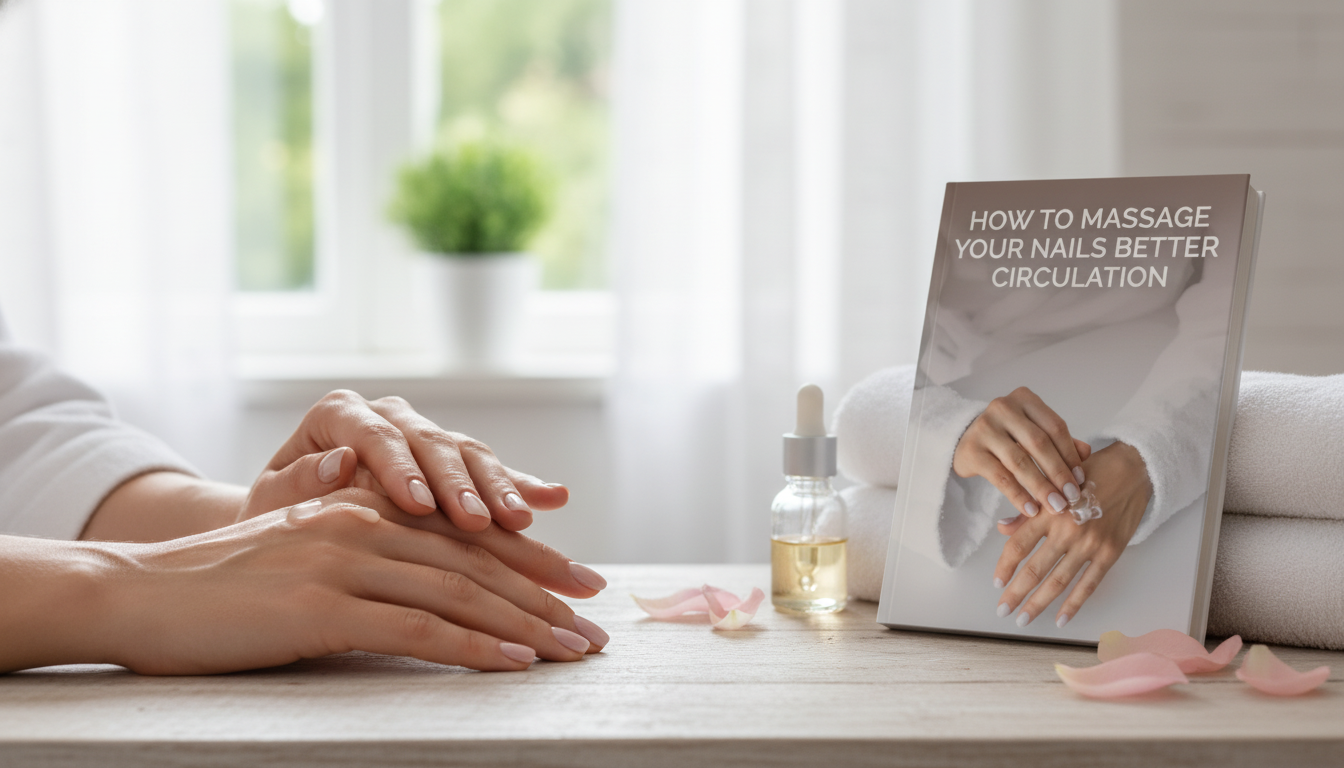
If you like a guided, check-the-box approach, a step-by-step format can help keep the pressure light and the session short enough to stick with.
Nail Massage Guide for Growth, Health & Relaxation (digital download)
Techniques to try when nails feel weak or cuticles look rough
When nails are peeling or the skin around them looks frayed, the goal is to improve conditioning and reduce day-to-day trauma. These add-ons stay gentle while focusing attention where dryness and tension build.
- Micro-circles at the nail matrix area: use the soft pad of the thumb to make tiny circles just above the cuticle line for 10 seconds per nail.
- Knuckle-to-fingertip strokes: stroke from the middle knuckle to the fingertip to encourage fluid movement and relaxation.
- “Moisture sandwich” (night): apply a light oil, then a cream, then a small amount of balm; massage each layer briefly.
- Gentle cuticle conditioning instead of cutting: focus on softening and massaging rather than trimming aggressively to reduce hangnails.
- Pairing with hand care basics: limit acetone exposure, wear gloves for dishes/cleaning, and avoid using nails as tools.
For extra support in dry environments (office AC, winter heat, travel), a small desktop humidifier can make hands feel less “paper dry,” especially when combined with a nightly balm routine.
Mini USB Air Humidifier with Aromatherapy & LED Light
Relaxation-focused add-ons (for evenings, travel, or desk breaks)
Nail massage fits easily into tiny pockets of time—waiting for a meeting to start, winding down after dishes, or decompressing before bed.
Reduce puffiness with facial massage (digital guide)
Common mistakes and when to pause
A guided approach for consistency
FAQ
How often should nail massage be done to support healthier-looking nails?
Daily is ideal, but 3–5 times per week is still effective if you stay consistent. Keep sessions short (about 2–5 minutes) and use gentle pressure to avoid irritating the cuticle area.
Does nail massage help nail growth?
Nails grow from the matrix, so massage can’t override genetics or instantly speed growth. It may support circulation and cuticle condition, which can improve how nails look and help reduce breakage when paired with good hydration.
What should be used for nail massage if skin is sensitive?
Choose fragrance-free hand cream, plain petroleum jelly, or a simple jojoba/squalane oil. Patch test first, and stop using any product that causes burning, redness, or swelling.
Recommended for you










Leave a comment