Dry, flaky lips rarely come from one cause. Weather, habits, skincare actives, and even indoor air can stack the odds against a smooth feel and comfortable finish. A routine that actually works does three things consistently: supports the lip barrier, adds water where it’s missing, and seals in moisture so you’re not reapplying every 20 minutes or dealing with stinging.
Lips are uniquely prone to dehydration, and that’s not just bad luck. The skin on the lips is thinner and has fewer oil glands than most facial skin, so it loses moisture faster and has less natural “slip” to buffer wind and low humidity.
If chapping is frequent or severe, it’s worth reviewing basic care guidance from dermatology sources like the American Academy of Dermatology Association.
The most reliable approach is a two-step layering method. First, bring in hydration with water-binding ingredients; then lock it down with a protective seal so it stays put.
Apply a humectant layer (like glycerin or hyaluronic acid) to slightly damp lips. This helps pull and hold water at the surface so lips feel softer and less tight.
Follow with an occlusive layer—petrolatum, lanolin (if tolerated), dimethicone, or waxes—to reduce water loss and protect against wind and dry indoor air.
When lips are flaky, it’s tempting to scrub. The problem: harsh scrubs and aggressive brushing can create micro-tears, trigger more peeling, and keep you stuck in a cycle.
Consistency matters more than having ten products. A few timed touchpoints prevent dryness from building up and reduce the urge to lick or pick.
| Time | What to do | Product type | Notes |
|---|---|---|---|
| Morning | Apply a hydrating layer, then a protective balm | Humectant + occlusive balm | Choose non-stinging, fragrance-free if sensitive |
| Before going outside | Add sun protection | Lip product with SPF | Reapply every 2 hours when outdoors |
| After meals | Reapply a thin protective layer | Comfort balm/ointment | Avoid licking to “fix” dryness |
| Evening | Soften flakes, then seal | Balm + soft cloth + ointment | Keep exfoliation gentle and infrequent |
| Bedtime | Apply a thicker layer as a mask | Occlusive ointment | Best step for overnight repair |
For one week, track what’s happening on days your lips flare: weather shifts, a new lipstick or balm, spicy foods, a toothpaste change, or facial actives creeping past the lip line. Patterns show up fast when you’re looking for them.
If a balm “works” only while it’s on your lips and then leaves them worse, it may be irritating or simply not sealing well enough. Look for barrier-friendly basics first, then add extras as tolerated.
Lips can burn, and sun exposure contributes to dryness and long-term damage. Keep an SPF lip product in your daytime rotation, especially for outdoor errands, commuting, and vacation days. General sun-protection basics are covered by sources like Mayo Clinic.
If indoor dryness is a constant battle, the Mini USB Air Humidifier with Aromatherapy & LED Light is an easy desk- or nightstand-friendly option to support a more comfortable environment.
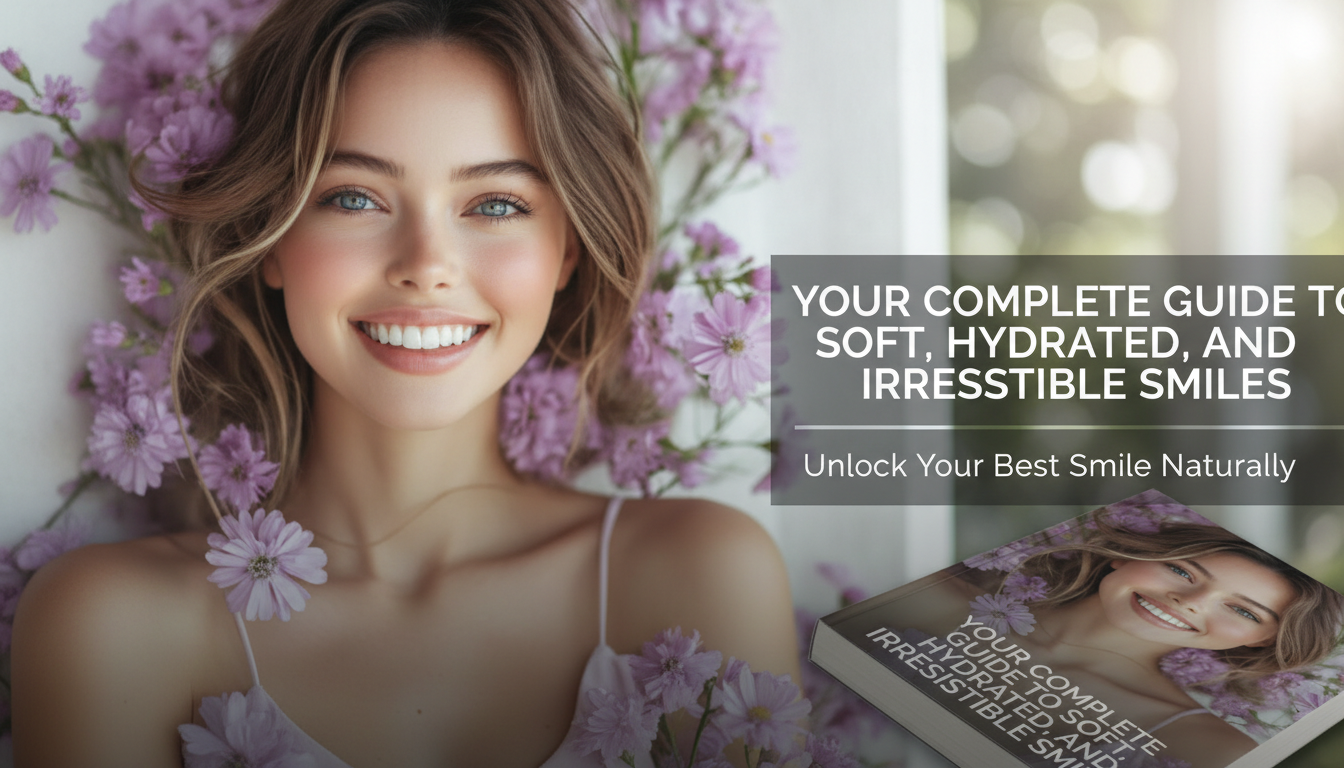
For a step-by-step framework focused on comfortable, soft lips and an easy self-care rhythm, explore Your Complete Guide to Soft, Hydrated, and Irresistible Smiles (Digital eBook).
And if facial tension, puffiness, or rushed mornings make it harder to stay consistent with self-care, Smooth Mornings Start with Massage (Digital Guide) can help you build a quick routine that pairs well with a calmer, less-irritated lip area.
Apply in the morning, after meals (and toothbrushing), and before bed, then add extra only when you’re exposed to wind, sun, or very dry air. If you feel like you need it constantly, switch to a plain, fragrance-free occlusive ointment and make sure you’re sealing after hydration.
Peeling can continue if the balm is irritating (flavor/fragrance/tingle), if you’re over-exfoliating, licking your lips, or if dry air and sun are still stripping moisture. Simplify to gentle, fragrance-free products and layer a humectant under an occlusive to better seal in hydration.
Yes—lips can burn, and sun exposure can worsen dryness and contribute to long-term damage. Use a lip SPF during daytime outdoor exposure and reapply about every two hours when you’re outside, especially after eating or drinking.










Leave a comment