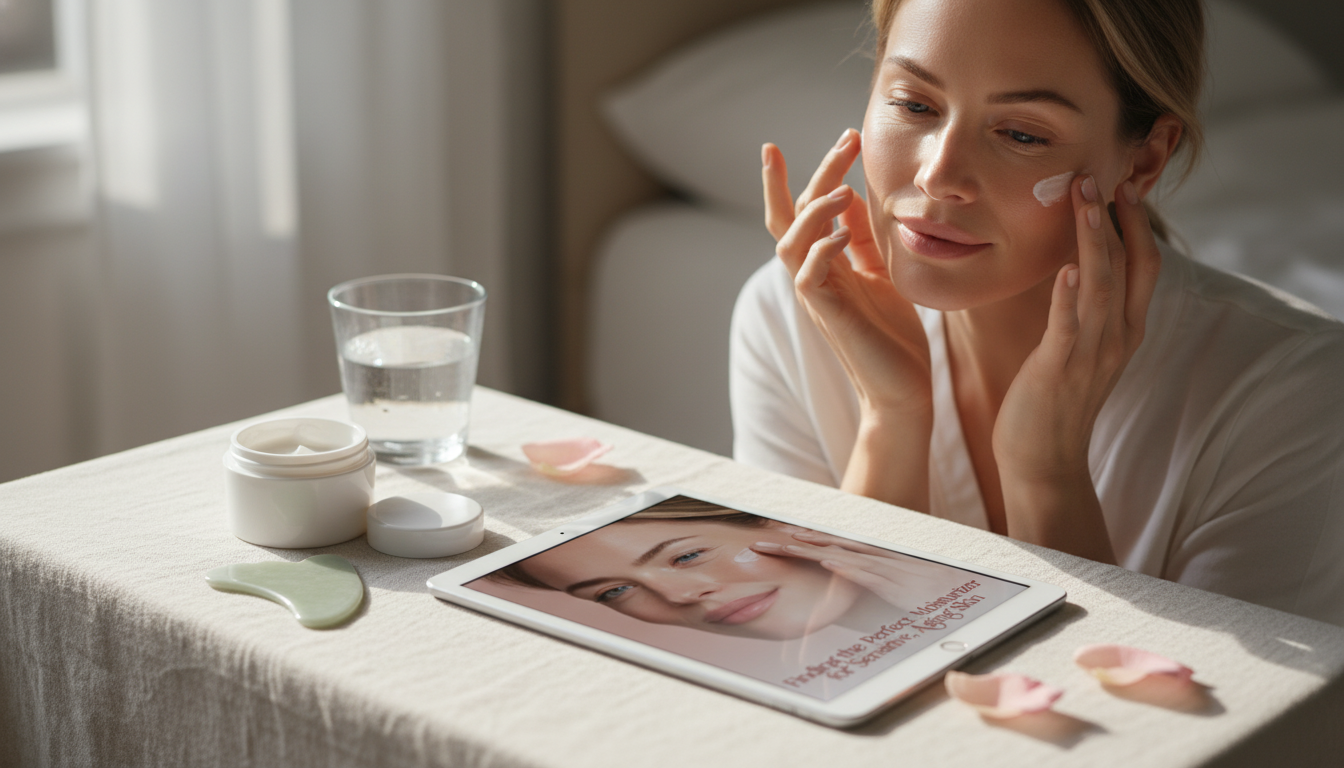
Sensitive, mature skin often reacts to what it needs most: rich hydration and targeted anti-aging ingredients. The best moisturizer choice balances barrier repair, comfort, and long-term resilience—without common irritants. Use this guide to match texture, ingredients, and routine timing to dryness level, sensitivity triggers, and visible aging concerns.
As skin matures, it typically produces fewer protective lipids, and transepidermal water loss can increase—both of which can make skin feel tight, look dull, and react more easily. A thinner, more fragile barrier may also tolerate less: added fragrance, harsh alcohols, and “tingly” actives can trigger stinging or redness even if they worked years ago.
Fine lines can appear deeper when skin is dehydrated, so a moisturizer that restores water content and reduces water loss may soften the look of lines quickly. For sensitive, aging skin, the goal usually isn’t “stronger,” it’s “steadier”: fewer potential triggers and more barrier-building ingredients used consistently.
Before buying a moisturizer, clarify what your skin is actually asking for day-to-day:
A well-matched moisturizer usually combines three jobs: pull in water, rebuild the barrier, and seal the surface enough to keep comfort lasting for hours.
If you’re unsure, a conservative patch-test can save weeks of irritation: apply to a small area for 3 days, then expand use. Stop if you develop burning, swelling, or a rash. For general moisturization guidance, the American Academy of Dermatology Association and the National Eczema Association offer practical tips on moisturizing routines and barrier support.
| Skin need | Helpful ingredients | When to use | Texture tips |
|---|---|---|---|
| Tightness + dehydration | Glycerin, hyaluronic acid, panthenol | Morning and night, especially after cleansing | Gel-cream under sunscreen; cream at night |
| Dry, flaky patches | Ceramides, cholesterol, fatty acids, squalane | Nightly; also after exfoliation/retinoid nights | Cream or balm; layer over a hydrating serum |
| Stinging/redness-prone | Colloidal oatmeal, allantoin, centella, dimethicone | Any time skin feels reactive | Simple, fragrance-free cream; avoid “tingly” products |
| Fine lines look deeper when dry | Humectants + barrier lipids combo | Daily; add richer layer at night | Medium-weight cream to prevent water loss |
| Very dry climate or winter | Petrolatum or heavier occlusives | Night; spot-treat dry zones | Balm on cheeks/around mouth; lighter on T-zone |
If you want a structured, low-guesswork approach—ingredient red flags, texture matching, and routine pairing—see Finding the Perfect Moisturizer for Sensitive, Aging Skin (digital download). For swelling-prone mornings, Smooth Mornings Start with Massage can complement a barrier-first routine with gentle technique. And if your home air is dry, the Mini USB Air Humidifier with Aromatherapy & LED Light may help reduce that “tight by noon” feeling that makes fine lines look more pronounced.
Look for barrier lipids (ceramides, cholesterol, fatty acids) plus humectants like glycerin, hyaluronic acid, and panthenol, with soothing options such as colloidal oatmeal or allantoin. If you’re reactive, avoiding added fragrance and essential oils can reduce flare-ups.
Often, yes—nighttime is ideal for richer creams or balms that reduce water loss and support barrier repair. If you’re prone to clogged pores, apply the heavier layer only to drier zones like cheeks and around the mouth.
Use the “moisturizer sandwich” method (moisturizer, then retinoid, then moisturizer) and reduce retinoid frequency if stinging starts. Prioritize barrier repair for a couple of weeks before increasing strength or application nights.










Leave a comment