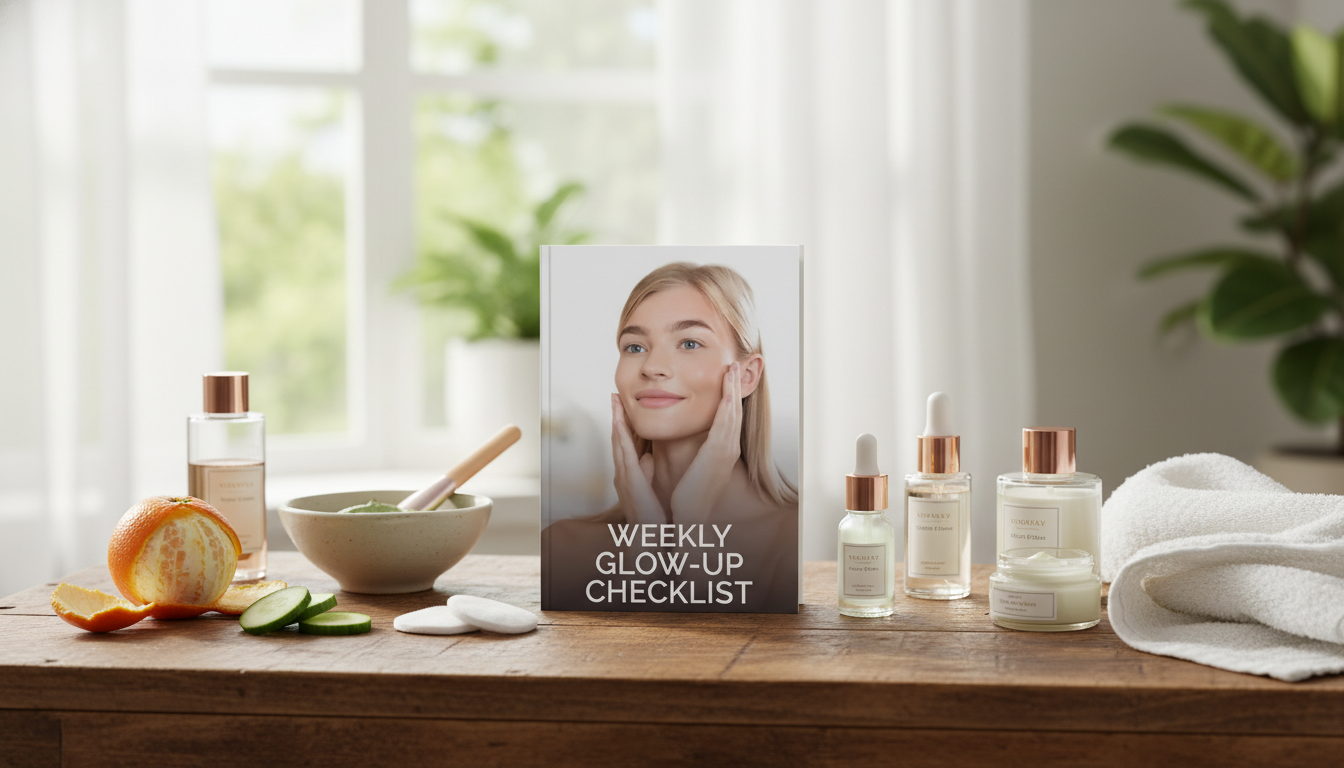
A weekly reset can make skincare feel easier: fewer random “try everything” nights, more consistency, and better recovery between exfoliation and masks. A glow-up week works best when it’s predictable—one or two intentional treatment moments, surrounded by barrier-support habits that keep skin calm. Below is a clear weekly rhythm you can repeat, adjust gently, and stick with long enough to actually see results.
A weekly glow-up is a planned rhythm: one or two focused treatment nights (exfoliation or a targeted mask) balanced with barrier-support nights. It’s not daily strong acids, constant “detox” masking, or chasing a brand-new product every few days.
Most “glow” comes from smooth texture plus a hydrated surface and a more even-looking tone. When your skin barrier is irritated, even a mild exfoliant can feel harsh—leading to redness, flaking, and sensitivity that can make skin look duller, not brighter. Keep the same weekly cadence for 3–4 weeks before changing multiple variables.
Before you schedule treatments, do a quick check-in. Oily/combination skin often shines by midday; dry skin can feel tight or show flakes; sensitive skin may sting even with “basic” products; acne-prone skin tends to clog easily; discoloration-prone skin holds onto marks longer.
Scale back if you notice sensitivity signals: burning on application, increased redness after washing, tightness that lasts, new flaky patches, or sudden breakouts after introducing actives. Use the pause rule: if skin is reactive, skip exfoliation and stick to cleanser + moisturizer + sunscreen for 3–5 days before reintroducing treatments. When possible, patch test new peels or masks (jawline or behind the ear) 24–48 hours before full use.
Daily non-negotiables stay the same all week: a gentle cleanse (especially at night), moisturizer to reduce water loss, and broad-spectrum sunscreen every morning. For treatment nights, choose 1–2 total per week: either a peel/exfoliant night or a targeted mask night (avoid doing both back-to-back at first). The rest are recovery nights—simple, hydrating, and boring in the best way.
If you use retinoids, avoid pairing retinoid + peel on the same night. Alternate to lower the irritation risk and keep your barrier steady.
| Day | Focus | What to do | What to avoid |
|---|---|---|---|
| Mon | Recovery | Gentle cleanse, moisturizer, optional hydrating serum | New actives |
| Tue | Treatment (option A) | Mild exfoliation/peel night + moisturizer | Retinoid, strong mask |
| Wed | Recovery | Moisturize well, keep routine simple | Scrubs, hot water |
| Thu | Mask (option B) | Hydrating or calming mask + moisturizer | Peel + mask combo |
| Fri | Recovery | Cleanse, moisturize, early bedtime if possible | Extra acids |
| Sat | Optional extra | If tolerant: brightening/hydrating focus | Adding multiple new products |
| Sun | Reset | Plan next week, clean tools, restock basics | Over-exfoliating “catch up” |
Frequency matters more than intensity. Begin at 1x/week; only move to 2x/week if skin stays comfortable for several weeks. Apply to clean, dry skin, follow timing instructions, moisturize afterward, and be strict about daily sunscreen. The American Academy of Dermatology shares practical exfoliation safety guidance that aligns well with this “mild and steady” approach: https://www.aad.org/public/everyday-care/skin-care-basics/care/exfoliation.
If you want a structured page you can reuse, the Weekly Glow-Up Checklist (digital download) is designed to help space peels and masks while keeping recovery nights simple. Add small self-care “boosters” that help skin indirectly: water intake, consistent sleep, a clean pillowcase, and a quick stress-downshift before bed.
Keep water lukewarm and cleanse gently; heat and friction can amplify sensitivity after treatments. Wash tools weekly (makeup brushes, reusable pads, facial tools) and replace old sponges to reduce congestion triggers. On recovery nights, light facial massage can help you look more refreshed (keep pressure minimal and avoid inflamed breakouts). A step-by-step option is Smooth Mornings Start with Massage.
In dry environments, a humidifier can reduce tightness and support a more comfortable barrier—especially during colder months or heavy A/C seasons. The Mini USB Air Humidifier with Aromatherapy & LED Light is an easy desk or nightstand upgrade. For general gentle-routine principles, Mayo Clinic’s guidance is a solid reference point: https://www.mayoclinic.org/healthy-lifestyle/adult-health/in-depth/skin-care/art-20048237.
Sunscreen is non-negotiable, especially when you exfoliate. If you need a refresher on broad-spectrum basics, the FDA overview is helpful: https://www.fda.gov/drugs/understanding-over-counter-medicines/sunscreen-how-help-protect-your-skin-sun. Seek professional guidance for persistent burning, swelling, hives, or a worsening rash.
Start at 1x/week and keep it there for a few weeks. Only increase to 2x/week if your skin stays comfortable, and separate peel nights from retinoids and drying masks while maintaining daily sunscreen.
It’s usually best not to stack them early on. If you do combine, keep it very gentle (hydrating or calming mask only) and only after your skin has already adjusted—otherwise space them at least 48 hours apart.
Pause actives for several days and switch to cleanser + moisturizer + sunscreen. Avoid hot water and scrubs, then reintroduce treatments at a lower frequency (or choose milder options) once your skin feels normal again.












Leave a comment