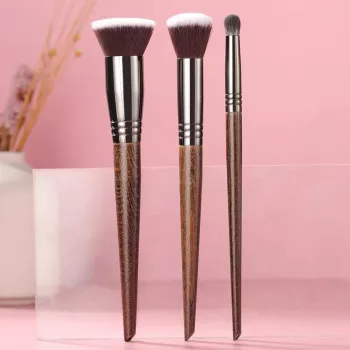
A small brush wardrobe can make cream and liquid makeup look smoother, more even, and easier to control—especially when blending around the nose, under-eyes, and lids. This 3-piece set is built for quick everyday routines: one brush to lay down base, one to detail and refine, and one to build and blend eye looks without harsh edges.
What’s Included and What Each Brush Does
When creams and liquids are the stars of your routine, having distinct brushes for distinct jobs helps you avoid overworking product (which can lead to streaks, lifted base, or patchy eyeshadow).
- Base brush: designed to spread and blend liquid foundation, tinted moisturizer, or cream blush with fewer streaks.
- Detail/precision brush: helps reach corners (around nostrils, under eyes, along jawline) and refine edges after initial blending.
- Eyeshadow brush: supports cream or liquid shadow placement, smoothing, and soft diffusion for one-and-done looks or layered color.
- Why three brushes matter: separating tasks (apply, refine, blend) keeps product cleaner and finishes more even—especially with fast-setting formulas.
Quick Use Guide for Cream and Liquid Products
| Brush role |
Best for |
Where it helps most |
Technique tip |
| Base blending |
Liquid foundation, skin tint, cream bronzer |
Cheeks, forehead, jawline |
Use light pressure and short sweeping strokes; finish with small circular buffing |
| Precision/detail |
Concealer, spot coverage, edge cleanup |
Under-eyes, around nose, blemishes |
Tap to place product, then micro-blend the edges without dragging |
| Eye placement/blending |
Cream/liquid shadow, eye primer, shimmer toppers |
Lids, crease edge, outer corner |
Pat to deposit, then softly sweep the perimeter to blur |
How to Use the Set for a 5-Minute Base
A quick base is mostly about timing and restraint: letting skincare settle, starting with less product, and blending in short, controlled motions.
- Prep: apply moisturizer and let it settle; add sunscreen if used, then wait 2–3 minutes before foundation to reduce pilling. For a simple cleansing routine before makeup, follow gentle guidance like the American Academy of Dermatology Association’s recommendations: How to wash your face.
- Apply foundation: dot product on the face (usually less than expected), then use the base brush to spread from the center outward.
- Build coverage: add thin layers only where needed; cream and liquid formulas tend to look more natural when layered lightly.
- Refine: use the detail brush to blend along the nose crease, around the mouth, and at the hairline where streaks tend to show.
- Conceal: place concealer with the detail brush and blend edges with gentle tapping to avoid lifting base makeup.
If you routinely apply makeup on the go (work bag, travel, gym), keeping brushes clean between full washes can help minimize residue transfer. Basic hand hygiene also matters when working near the eyes and nose; the CDC’s overview is a helpful refresher: Clean Hands.
Cream and Liquid Eyeshadow: Smooth Application Without Patchiness
Cream and liquid shadows can look incredibly polished, but they often reward a “pat first, blend second” approach. The eyeshadow brush in this set is meant to place product evenly, then soften edges without disrupting the center pigment.
- Start thin: place a small amount of cream shadow on the lid and pat with the eyeshadow brush before swiping.
- Blend the edge, not the center: keep pigment on the lid while softly sweeping the perimeter to avoid over-sheering.
- Layer safely: let each layer set for 15–30 seconds before adding more product to prevent skipping.
- For shimmers: pat to place for maximum shine; avoid aggressive blending that can cause uneven texture.
- Quick looks: one wash of color + softened edge; or two-step (matte base + shimmer on center lid).
Choosing Products That Pair Well With Brushes
Brush performance is a mix of fiber shape and formula behavior. If a product is very thick, very fast-setting, or applied too heavily, even a great brush can’t fully prevent texture.
- Foundations and skin tints: medium-fluid textures tend to blend faster and reduce streaking compared with very thick creams.
- Cream blush/bronzer: warm the product on the back of the hand first, then pick up a small amount for a softer, diffused result.
- Concealer: use minimal product under eyes and blend outward; too much concealer can crease regardless of tool.
- Setting strategy: for dewy finishes, set only where needed (under eyes, sides of nose); for long wear, lightly set the T-zone.
- If makeup lifts while blending: reduce skincare layers, allow more dry time, or switch from swiping to tapping motions.
Cleaning, Drying, and Keeping Brush Performance Consistent
With creams and liquids, buildup can sneak up fast—showing up as streaks, patchiness, or a “dragging” feel. A simple maintenance rhythm keeps application predictable.
Who This Set Fits Best
Shop Essentials to Pair With Your Routine
FAQ
Can these brushes be used with powder products too?
Yes, they can work with powders, but they’re most comfortable with creams and liquids. With powders, use a lighter hand and tap off excess so you don’t pack too much pigment into one spot.
How often should brushes used with liquid foundation be cleaned?
Spot-wipe after each use when possible, then deep-clean about once a week if you use liquid foundation frequently. Clean more often if buildup is visible or if blending starts to look streaky.
Why does foundation look streaky even with a brush?
Streaks often come from using too much product, blending before skincare has set, or swiping instead of tapping. Apply thinner layers and finish with short, gentle buffing motions to smooth the edges.
Recommended for you










Leave a comment