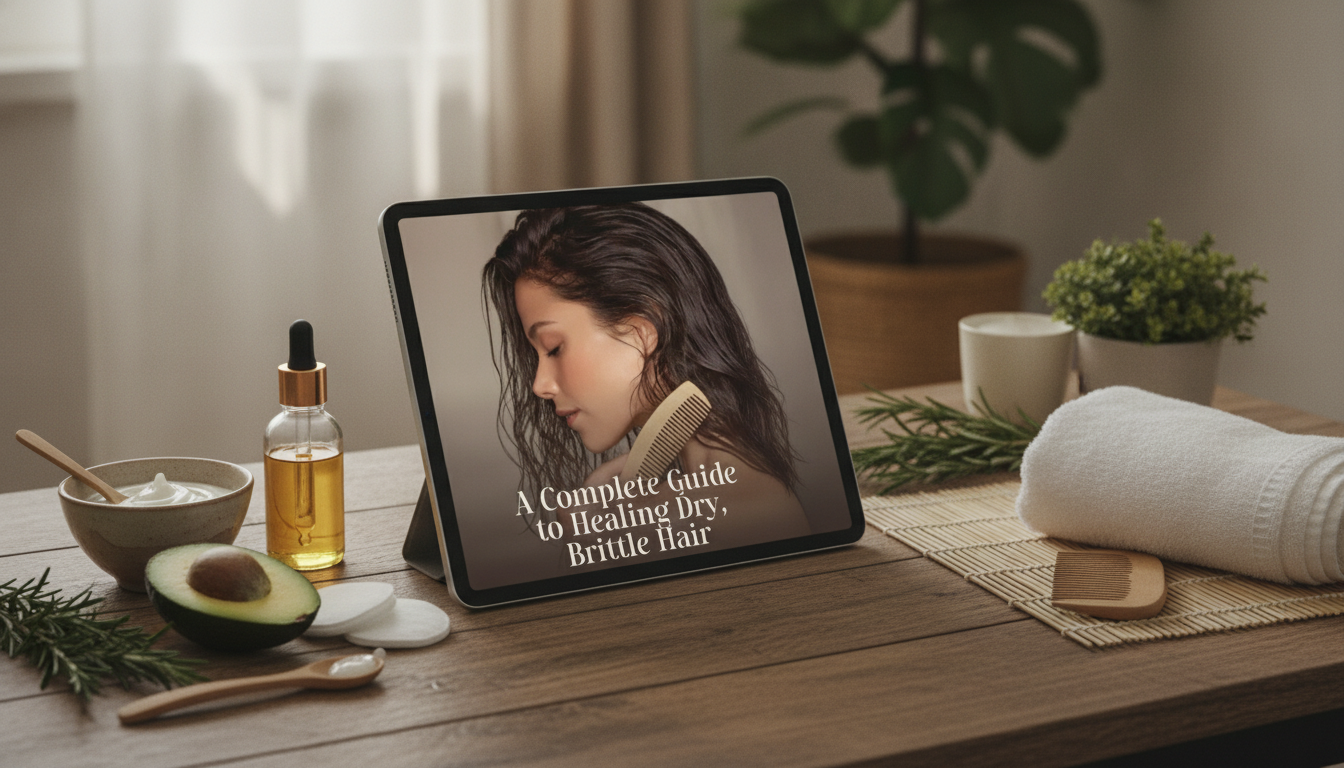
Dry, brittle hair is usually easy to spot: strands feel rough or “crispy,” look dull, tangle quickly, and snap off during detangling or styling. Split ends, frizz that won’t settle, and a stiff feel (even right after wash day) are all common signs.
Brittleness often comes down to two things happening at once: the cuticle layer is worn or lifted, and the hair fiber has lost flexibility. When hair can’t bend, it breaks. Heat tools, bleach/dye, harsh shampoos, UV exposure, hard-water minerals, overwashing, and tight styles that pull on the hairline all add up over time.
Also, dry scalp and dry hair aren’t the same problem. You can have flakes or itch while still getting oily roots—especially if styling products build up near the scalp while ends keep drying out.
A practical plan works best when it tackles both sides: damage (structure) and dehydration (lubrication and water balance). For general hair-care guidance and prevention tips, the American Academy of Dermatology Association is a reliable reference: AAD hair care tips.
Most “my hair is breaking” situations improve faster when you identify the main driver. These three categories cover a lot of real-life cases:
| What you notice | Most likely issue | First adjustments to try |
|---|---|---|
| Hair feels rough and frizzy after it dries | Moisture loss + cuticle wear | Switch to a sulfate-free gentle shampoo, add weekly deep conditioning, reduce heat |
| Hair feels stiff, crunchy, and snaps easily | Too much protein / not enough moisture | Pause protein masks 2–3 weeks, use a rich moisturizing mask, add leave-in |
| Hair feels heavy, coated, or dull; products stop working | Buildup or hard water minerals | Clarify every 2–4 weeks, consider chelating if hard water, lighten styling layers |
| Ends split and break even with conditioner | Mechanical damage + old splits | Trim, detangle with slip, use protective styles, reduce friction from towels/pillowcases |
| Hair breaks mainly during styling | Handling/heat stress | Lower heat, use heat protectant, style on lower tension, avoid brushing dry hair |
If you heat-style, use a heat protectant and keep temperature moderate. Tools with adjustable temperature can help you avoid “max heat” habits—especially on fragile ends. If you’re shopping for a tool that makes it easier to control heat, consider the 32mm Ceramic Auto Hair Curler with Adjustable Temperature and treat temperature control as part of your breakage-prevention strategy (along with fewer passes and fully dry hair before styling).
If you want a structured routine you can follow step by step (especially when you’re not sure whether you need moisture, protein, or a reset), use A Complete Guide to Healing Dry, Brittle Hair (Digital eBook). It’s designed to be easy to reference on wash day and helpful while shopping for essentials, so your routine stays consistent instead of random.
Softness can improve within 1–2 washes, but noticeable breakage reduction often takes 3–6 weeks of consistent gentle care. Heavily processed hair usually needs ongoing maintenance plus regular trims to keep ends from splitting.
Protein can help when hair feels overly soft, weak, or stretchy, but too much protein can make hair feel stiff and more likely to snap. Space protein treatments out (often every 2–6 weeks) and adjust based on how your hair feels after each use.
Detangle only when hair is damp and coated with conditioner or leave-in for slip, then work from ends upward using fingers or a wide-tooth comb. Go slowly and reduce friction from rough towels, aggressive brushing, and detangling on dry hair.








Leave a comment