Electric Facial Massager: Daily Comfort, De-Puffing, and Smoother-Looking Skin
An electric facial massager can add a few minutes of soothing, consistent movement to a skincare routine—helping ease facial tension, support a refreshed look, and improve how products spread across the skin. Used with light pressure and a slip-friendly serum or moisturizer, it’s a simple step that can feel spa-like at home.
When used gently and consistently, an electric facial massager can support comfort and a healthier-looking routine without requiring complicated techniques.
- Encourages a temporarily refreshed look by helping reduce the appearance of puffiness (especially around the cheeks and jawline).
- Provides gentle stimulation that can make skin feel more awake and comfortable after a long day or a short night.
- Helps distribute skincare evenly, reducing tugging compared with using fingers alone.
- Supports relaxation by easing tight-feeling areas like the jaw, temples, and forehead when used lightly.
Facial massage is often associated with “de-puffing” because it promotes gentle movement across the skin. For a helpful overview of lymphatic drainage massage and how light techniques are typically approached, see the Cleveland Clinic’s lymphatic drainage massage overview.
Who It’s Good For (and When to Skip It)
This tool fits best when the goal is quick comfort and a more refreshed look—not aggressive pressure or intense “work.”
- Good match for: morning de-puffing, occasional jaw/temple tension, uneven product application, and quick at-home self-care.
- Sensitive or reactive skin: keep sessions short, use the lowest intensity, and always use a lubricant (serum/gel/moisturizer) to avoid friction.
- Skip or get professional guidance if: there is active infection, open cuts, severe acne flare-ups, recent facial surgery, or a medical condition where facial massage is discouraged.
- If using prescription topicals (retinoids, acne treatments): avoid massaging immediately after application if irritation occurs; consider massaging before actives and applying treatment afterward.
If you’re building a routine from the ground up, the American Academy of Dermatology Association’s skin care basics is a reliable reference for everyday steps like cleansing, moisturizing, and sun protection.
How to Use It for Best Comfort and Results
A great session is more about glide and consistency than intensity. Think “feather-light pressure” and slow passes rather than pressing hard.
- Start with clean skin; apply a slip layer (hydrating serum, facial oil, or moisturizer) so the device glides without pulling.
- Use light pressure; let the device do the work—pressing harder does not improve results and can increase redness.
- Follow simple pathways: center of face outward on cheeks; jawline from chin toward ear; forehead from brows upward; avoid direct pressure on the throat/neck front.
- Keep sessions brief: 2–5 minutes is often enough, especially for beginners.
- Wipe the head after use and store dry; avoid sharing the device to reduce risk of irritation or contamination.
Quick Routine Guide (2–5 Minutes)
Quick Routine Guide (2–5 Minutes)
| Area |
Direction |
Time |
Tip |
| Cheeks |
Nose/center → outward toward ears |
60–90 sec |
Use slow passes; avoid dragging on dry skin |
| Jawline |
Chin → along jaw toward ear |
45–60 sec |
Keep pressure light near the jaw hinge |
| Forehead |
Brows → upward toward hairline |
30–45 sec |
Reduce intensity around fine lines if prone to redness |
| Under-eye (optional) |
Inner corner → outward on orbital bone |
15–30 sec |
Use the lightest setting; never massage directly on the eyelid |
Care, Cleaning, and Skin-Safety Basics
Clean tools feel better on the skin and help minimize avoidable irritation—especially if you’re using serums or richer moisturizers for slip.
- Clean after every use with a soft cloth; follow device-specific guidance for water exposure and cleaning agents.
- Avoid harsh solvents or abrasive pads that can damage the surface and create scratch points that irritate skin.
- If the skin looks persistently red, feels warm, or stings afterward, reduce frequency, shorten sessions, and increase slip; discontinue if irritation continues.
- Use sunscreen during the day as part of overall skin care; massage does not replace sun protection.
A Simple, Budget-Friendly Option
If you want a straightforward tool that’s easy to fit into real life, a compact electric device can be a practical choice—especially when the goal is quick comfort and a refreshed look rather than a long routine.
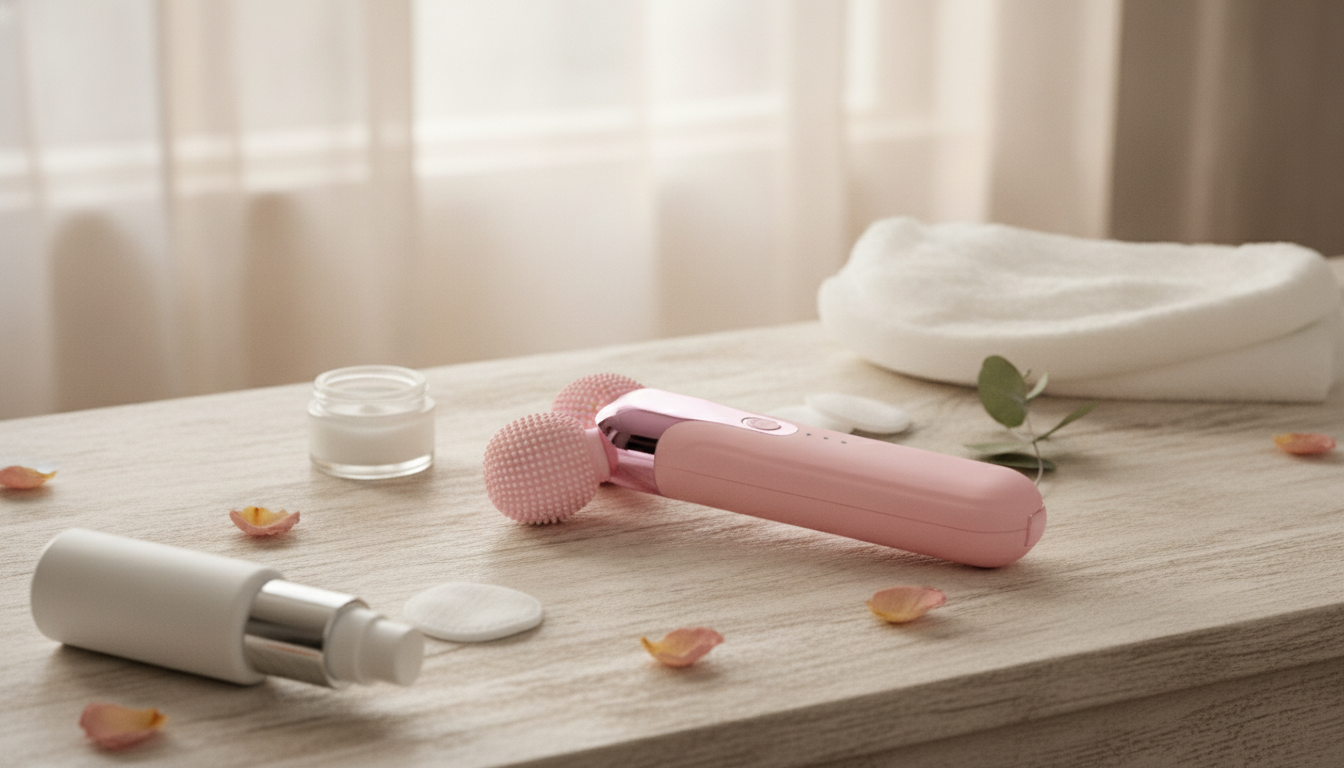
- Electric Facial Massager: a compact tool designed for quick daily use when skin needs a more refreshed look.
- Pairs well with a hydrating serum or moisturizer to improve glide and comfort.
- A practical add-on for travel or a small vanity setup (try the Red Rose Floral Women’s Cosmetic Bag for easy storage and organization).
How to Pair It with a Routine (Without Overdoing It)
Morning
Evening
If You Use Retinol or Masks
FAQ
How often should an electric facial massager be used?
Most people do well with 3–5 times per week, or daily if the skin tolerates it. Keep sessions short (2–5 minutes), use light pressure, and scale back if you notice lingering redness or irritation.
Can it help with puffiness under the eyes?
It may temporarily reduce the look of puffiness through gentle movement. Use the lowest setting, minimal pressure, and stay on the orbital bone—never massage directly on the eyelid.
Should it be used with oil or on dry skin?
Use a slip product like a serum, facial oil, or moisturizer so the device glides without tugging. Avoid using it on dry skin, especially if you’re prone to sensitivity or redness.
Recommended for you










Leave a comment