Face masks can be a quick, satisfying way to nudge skin toward a fresher, healthier-looking glow. The catch: masks work best as short-contact “boosters,” not as a substitute for the daily basics that protect your skin barrier over time. When you match the right mask type to what your skin actually needs (and stop before irritation starts), you’ll get more consistent results—without the tight, itchy aftermath that makes glow look like a myth.
Masks are temporary treatments. A well-formulated mask can hydrate, calm visible redness, soften rough texture, or help lift the look of surface oil—but it won’t permanently “shrink pores,” erase deep wrinkles, or replace sunscreen. The most reliable results come from pairing masks with gentle cleansing, a moisturizer that supports the barrier, and daily broad-spectrum SPF.
More time on skin isn’t always better. Leaving a mask on too long (or using it too often) can backfire by over-drying or sensitizing the skin. If you’re building a routine from scratch, a helpful baseline is: cleanse gently, mask briefly, moisturize after—then protect with SPF in the daytime. For general skin-care fundamentals, the American Academy of Dermatology Association is a solid reference point.
Choosing the right category matters as much as the brand. Think of mask types like tools: each one fits a different “skin signal.”
| Skin goal | Mask type to try | Key ingredients to look for | Common mistake to avoid |
|---|---|---|---|
| Dry, tight, flaky | Hydrating sheet or cream mask | Glycerin, hyaluronic acid, ceramides | Leaving a sheet mask on until it dries out |
| Oily shine, visible congestion | Clay mask (targeted) | Kaolin, bentonite, zinc | Using clay all over when cheeks are dry |
| Redness, sensitivity | Soothing cream/gel mask | Panthenol, colloidal oatmeal, centella | Fragrance/essential oils on reactive skin |
| Rough texture, dullness | Gentle exfoliating mask (1x/week) | Lactic acid, mandelic acid, enzymes | Combining with scrub/retinoid the same day |
| Post-breakout marks (uneven tone look) | Brightening-support mask (gentle) | Niacinamide, licorice extract, vitamin C derivatives | Chasing “tingle” as proof it’s working |
If you only adopt one habit, make it patch testing. Apply a small amount of a new mask behind the ear or on the inner arm and check the area at 24 hours. Redness, itching, swelling, or bumps are signs to skip that formula on your face.
Always follow the label’s contact time. If stinging or burning starts mid-mask, rinse early—don’t try to “push through.” Also avoid masking on broken skin, active sunburn, or right after aggressive exfoliation. If you use prescription acne products, retinoids, or you’re following a post-procedure plan, be extra cautious—your skin may be more reactive. For general guidance on cosmetics and reactions, the U.S. Food & Drug Administration has helpful consumer information.
If you’re trying to support a healthier barrier (less tightness, fewer “mystery” flare-ups), the National Eczema Association offers approachable education on irritation triggers and barrier basics that apply even beyond eczema.
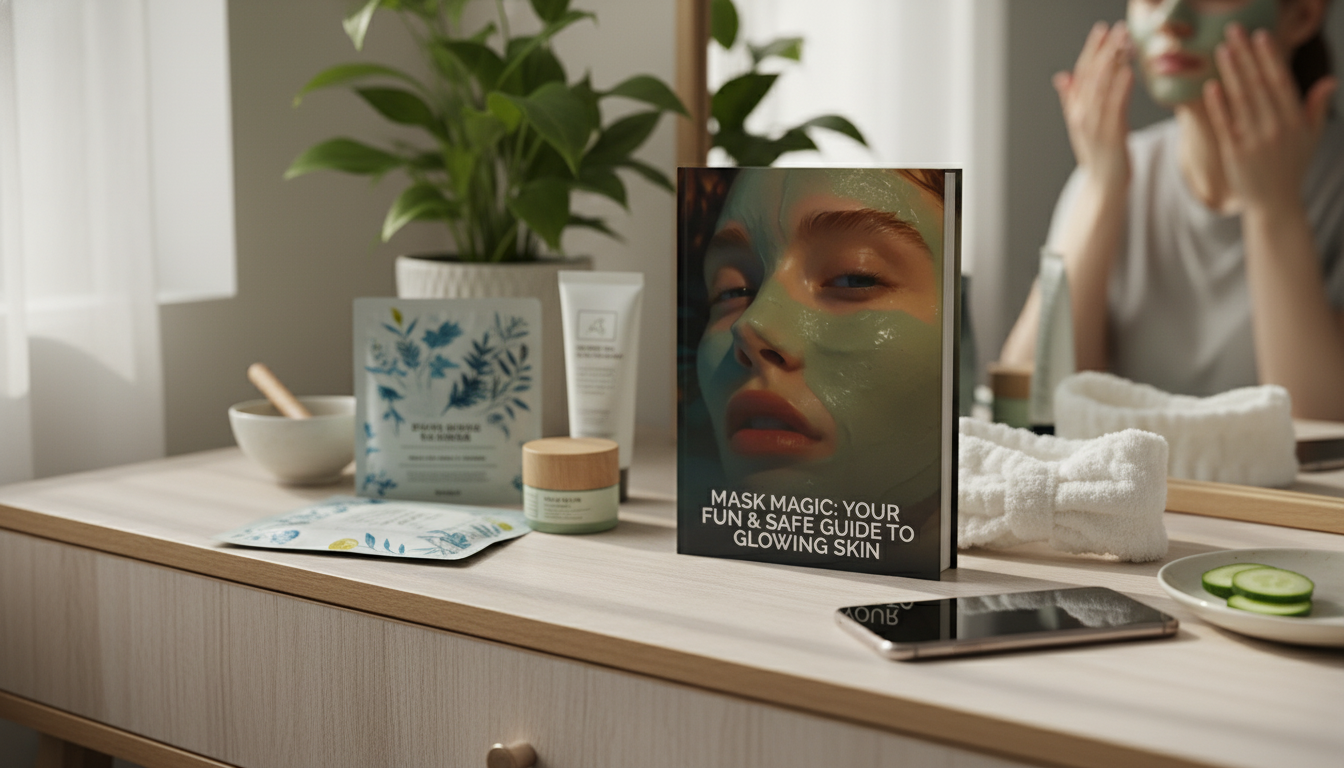
A simple structure prevents overdoing it: read your skin that day (dry, oily, irritated, dull), pick one mask type that matches, time it, then moisturize. If you like having a quick checklist for prep, ingredient compatibility, and aftercare, Mask Magic: Your Fun & Safe Guide to Glowing Skin (digital skincare eBook) is designed as a friendly reference you can follow without guesswork.
To pair masking with a de-puffing, glow-boosting habit on non-mask days, Smooth Mornings Start with Massage (reduce puffiness with facial massage) walks through simple techniques and routine tips that fit into a normal morning.
Mild tingling can happen with some exfoliating ingredients, but burning, strong stinging, or itching is a sign to rinse and stop. Patch test new products and keep the rest of your routine gentle for a few days if your skin feels reactive afterward.
Usually about 5–10 minutes, or until it’s mostly set but not fully cracked. Remove earlier if it starts to feel tight or uncomfortable, and moisturize after to reduce dryness.
Yes—especially if a formula is too occlusive, heavily fragranced, or used too often, or if you don’t cleanse thoroughly first. Try simpler formulas, shorten contact time, and adjust frequency if you notice congestion.










Leave a comment