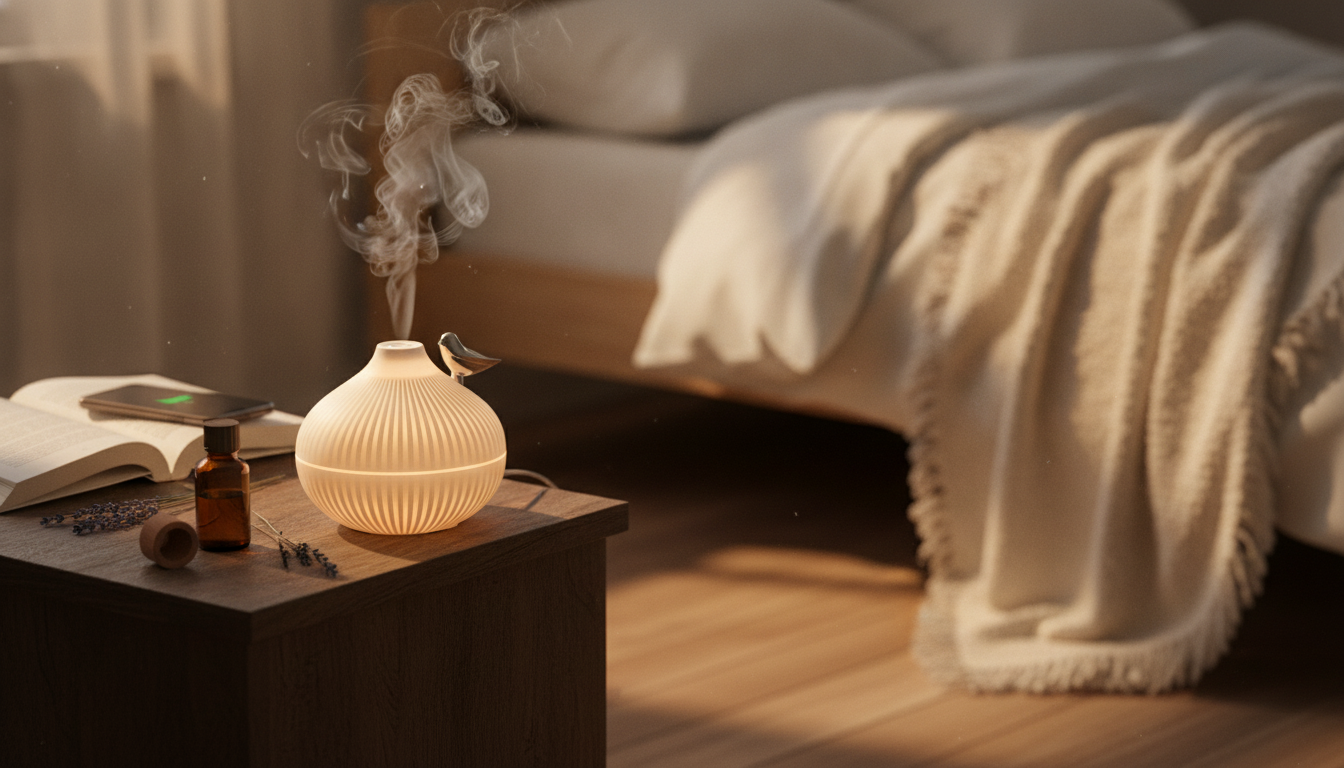
A mini USB air humidifier is a simple upgrade for personal spaces where the air feels dry—like a desk setup, a nightstand, a dorm corner, or a hotel room. This compact style is designed for close-range comfort, adding a light mist that can help reduce that “tight” dry-air feeling around the nose, throat, and skin. Many models also include optional aromatherapy support and a gentle LED light, turning a utilitarian device into a calming part of a daily routine.
The main job is straightforward: add a touch of moisture to the air around you. Because it’s small and USB-powered, it’s most effective in the “bubble” of space nearest to where you work, rest, or study.
If you’re trying to address moisture issues in an entire home (or you’ve noticed dampness and musty smells), it’s also worth reading guidance on moisture control and mold prevention from authoritative sources like the EPA’s mold and moisture guide.
Beyond mist, the add-ons are what make this kind of mini humidifier feel personal. Used thoughtfully, aromatherapy and lighting can support focus during the day and relaxation at night—without turning your space into an overpowering scent cloud.
If you use essential oils, stick to reputable safety info—especially around pets, children, and sensitive skin. The NIH NCCIH overview on essential oils is a helpful starting point for general precautions.
Where you place a mini humidifier matters as much as turning it on. The goal is steady mist output without dampening nearby surfaces or electronics.
| Step | What to do | Why it matters |
|---|---|---|
| Fill | Add water to the tank to the indicated level | Helps prevent dry running and inconsistent mist |
| Power | Connect to a USB power source with a stable connection | Reduces interruptions and flickering lights |
| Position | Set on a flat surface away from electronics and papers | Limits condensation near sensitive items |
| Test | Run for a few minutes and observe mist direction | Helps fine-tune placement before longer use |
Small humidifiers are easy to maintain—so they’re also easy to neglect. Fresh water and basic cleaning are the difference between clean-feeling mist and a unit that starts to smell “off.”
As a general moisture safety rule, avoid letting surfaces stay damp over time. For broader mold basics and prevention, the CDC’s mold information is a reliable reference.
| Scenario | Recommended placement | Aromatherapy/LED suggestion |
|---|---|---|
| Desk | Corner of desk, mist aimed away from keyboard and papers | Fresh scent; LED as a subtle ambient light |
| Bedside | Nightstand edge, mist aimed away from face and bedding | Gentle scent; dim LED for wind-down |
| Dorm | Shelf or dresser top with clearance | Low-intensity fragrance; LED for nighttime navigation |
| Travel | Stable surface near bed, away from electronics | Fragrance-free if sharing space; LED as night light |
Aromatherapy depends on how the unit is designed, so follow the product instructions and only use compatible methods in small amounts. If you notice residue, reduced mist, or irritation, stop fragrance use and clean the unit thoroughly.
For regular use, change the water frequently (daily is a solid habit) and clean routinely to prevent odor and buildup. If you won’t use it for a while, empty it and let the tank dry completely before storing.
That’s usually condensation from mist drifting onto a nearby surface or running the unit too long in a very small area. Redirect the mist, move it farther from walls and electronics, and shorten the runtime until the area stays dry.








Leave a comment