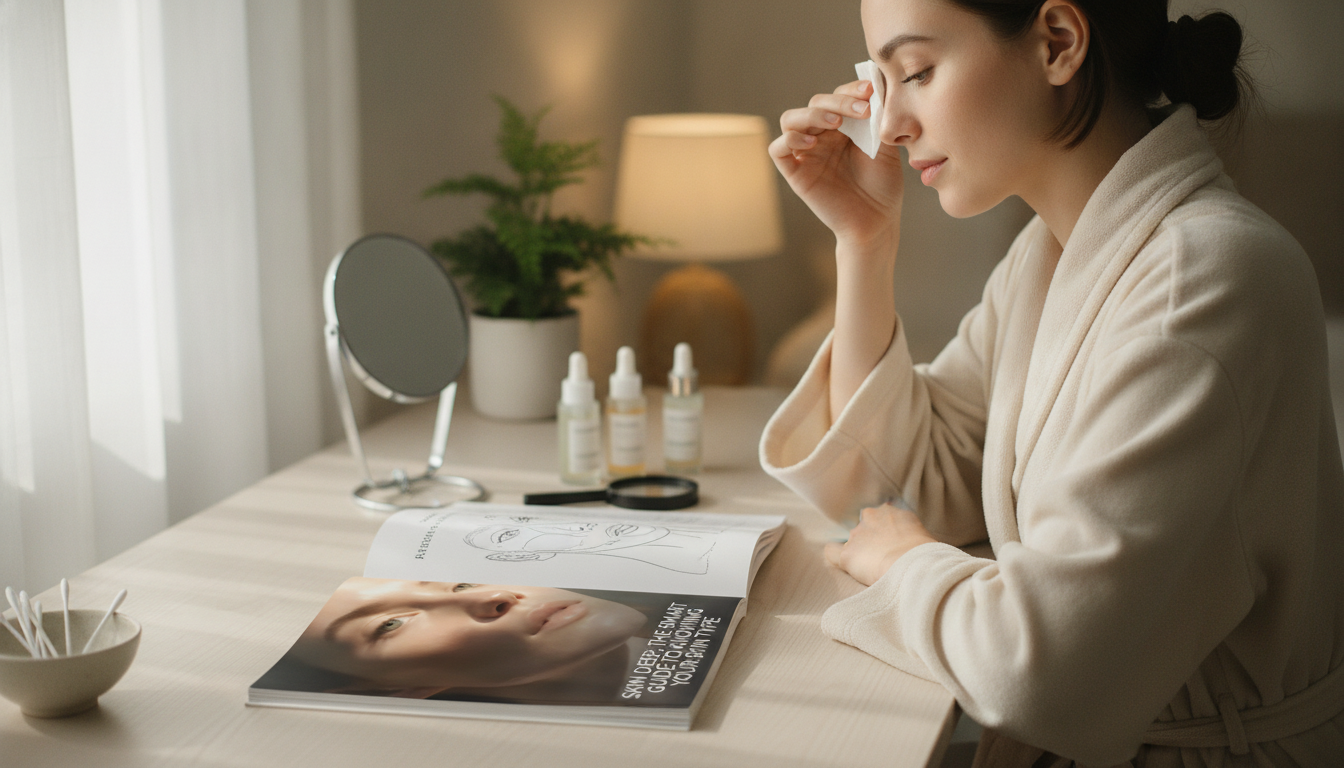
A skincare routine works best when it matches how skin actually behaves day to day—not how it looks in one mirror check. A little surface shine can be normal, and a little tightness can be temporary. The goal is to spot your baseline patterns (oil, hydration, and reactivity), then build a routine that keeps your barrier comfortable so any “treatment” step feels like a boost—not a gamble.
Skin type is a shorthand for your most consistent tendencies: how much oil your skin produces, how well it holds onto hydration, and how easily it gets irritated. Those patterns usually show up even when your skincare is simple and your stress level is average.
Skin concerns are different. Acne, dehydration, redness, dark spots, and texture can happen with any skin type—and they can change quickly with season, hormones, travel, or new products. If your routine suddenly stops working, it often means your skin’s baseline needs (especially barrier support) changed, not that you “mis-typed” yourself forever.
When things feel confusing, prioritize comfort first. A calm barrier makes it easier to tell what’s truly oily, truly dry, and what’s just irritated.
Cleanse once with a gentle cleanser, pat dry, and apply nothing—no moisturizer, no SPF, no serum—for 60–90 minutes. This short “quiet window” lets your skin show its natural behavior.
Look at (and lightly feel) your forehead, nose, cheeks, and chin. Notice shine, tightness, flaking, and whether pores look more visible in some areas than others.
Press clean blotting paper or a soft tissue to your T-zone (forehead/nose/chin), then to each cheek. Compare how much oil transfers from each zone.
Pay attention to stinging after cleansing or water exposure, and whether redness lingers. Quick flare-ups can be a sign your barrier is stressed, even if you’re not “sensitive” all the time.
Do the same test on a busy or stressful day and on a calmer day. If results differ, your “type” may be stable but your skin is reactive to lifestyle triggers—use that information to keep your routine flexible.
| What you notice after cleansing | Most likely pattern | What it usually needs first |
|---|---|---|
| Tight, papery, flaky; little to no oil on blot test | Dry | More moisture + barrier-supporting layers |
| Shiny in most areas; oil on both T-zone and cheeks | Oily | Light hydration + oil-control without stripping |
| Shiny T-zone but cheeks feel normal or tight | Combination | Zone-based routine (balance, don’t overcorrect) |
| Comfortable, minimal shine; soft feel; rare irritation | Balanced | Maintain with gentle basics and sunscreen |
| Stings easily, frequent redness, reacts to new products | Sensitive (can overlap with any type) | Simplify, soothe, and protect the barrier |
Dry skin often feels tight after washing and can look dull with fine flaking. A helpful way to think about it: dry skin lacks oil, so it needs a smarter mix of water-binding ingredients (humectants), skin-softening ingredients (emollients), and a seal (occlusives) to keep moisture from escaping.
Oily skin tends to have persistent shine and more visible pores, especially in the T-zone. It can still be dehydrated, which is why harsh cleansing can backfire—skin may feel “clean,” then get even oilier as it tries to compensate.
Combination skin behaves differently by zone. The common mistake is treating the whole face as oily, which can make cheeks drier and more reactive. Think “targeted support,” not “one-size-fits-all.”
If you want a repeatable method instead of guesswork, Skin Deep: The Smart Guide to Knowing Your Skin Type (Digital eBook) is built as a step-by-step self-assessment you can redo as your skin changes. It also helps translate your results into a simple routine framework you can adjust for seasons, sensitivity, and shifting concerns.
For common “active” questions, pairing Skin Deep with Retinol: Safely Navigating the Skincare Superhero (Digital Guide) can help you introduce retinoids more carefully, and Mask Magic: Your Fun & Safe Guide to Glowing Skin (Digital eBook) is useful if masks tend to leave you either glowing or irritated—with no in-between.
For trustworthy baseline guidance, see the American Academy of Dermatology Association, the NIAMS overview of skin conditions, and the Mayo Clinic’s guide to dry skin.
That combo often points to dehydration or a stressed barrier: your skin can be short on water (or irritated) while still producing oil. Try gentler cleansing, add lightweight hydrating layers, and reduce harsh exfoliation until comfort improves.
Reassess seasonally and anytime your routine stops working—especially after weather shifts, starting new actives, hormonal changes, or travel. Use the same simple test on multiple days to avoid a one-off result.
It can overlap with any skin type and often reflects barrier sensitivity or irritation rather than a permanent category. Minimizing triggers (like fragrance or over-exfoliation), patch testing, and introducing actives slowly can help reduce reactions.













Leave a comment