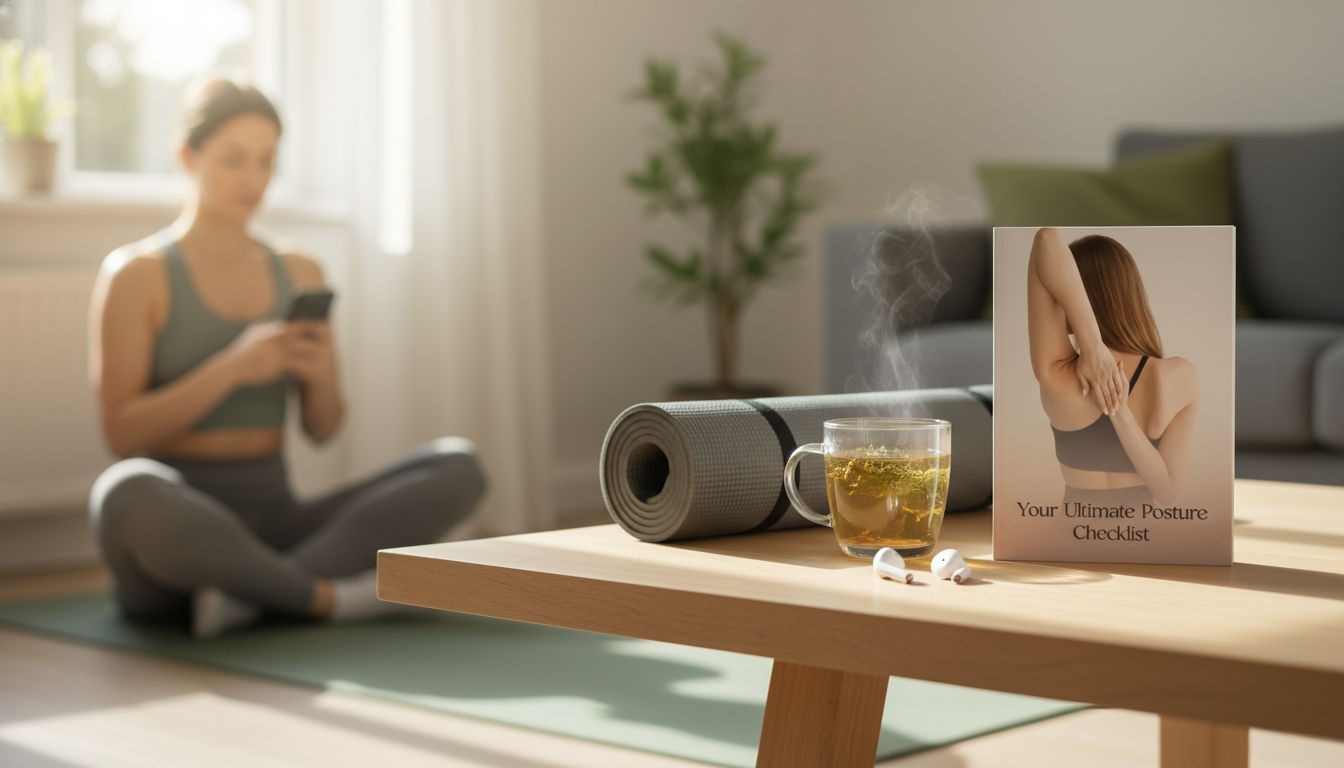
Better posture is less about “standing up straight” and more about stacking joints efficiently, reducing strain, and building repeatable habits. This guide walks through a quick self-check, practical cues for daily life, and a short routine that supports long-term comfort and confidence—without complicated jargon or long workouts.
Good posture is a neutral, balanced position that your body can maintain without bracing. Think: ears over shoulders, ribs stacked over the pelvis, and weight centered over the mid-foot. When alignment is efficient, muscles can share the load instead of one area (often the neck or low back) doing all the work.
What it isn’t: a forced chest lift, a hard arch in the lower back, or “pinning” the shoulder blades together all day. Sustainable posture feels calm—no gripping in the low back, no clenched jaw, and no locked knees.
Posture also isn’t a single pose you hold from morning to night. It changes with your tasks, your stress level, and your energy. The goal is frequent “resets” that bring you back toward neutral. Common signs you’re carrying excess strain include neck tension, upper-back tightness, low-back compression, and headaches after long screen time. For general prevention guidance and lifestyle factors that affect back comfort, see Mayo Clinic’s overview on back pain and NIH MedlinePlus: Back Pain.
Run this check once or twice a day, then repeat mini-resets whenever you notice tension building.
Pain rule: if a cue increases pain, tingling, numbness, or sharp discomfort, back off and choose the easier version (less range, softer effort, more support).
| Setting | Head/Neck | Shoulders/Arms | Spine/Pelvis | Feet/Support | Fast cue |
|---|---|---|---|---|---|
| Standing | Ears over shoulders, chin slightly tucked | Shoulders down/back (not pinned), arms relaxed | Ribs over pelvis, neutral low back | Weight mid-foot, knees soft | “Stack and breathe” |
| Desk sitting | Screen at eye level, avoid forward head | Elbows ~90°, wrists neutral | Sit on sit bones, small lumbar support | Feet flat or on footrest | “Hips back, ribs down” |
| Phone use | Bring phone up, not neck down | Relax traps, elbows supported if possible | Tall torso, avoid slumping | Stable stance or seated support | “Lift phone, lengthen neck” |
| Walking | Eyes forward, jaw relaxed | Arms swing naturally | Ribs over pelvis, slight forward lean from ankles | Push off big toe, land softly | “Long and easy” |
The simplest posture “program” is a set of tiny check-ins that ride on habits you already do. Instead of trying to remember all day, attach one reset to a reliable trigger.
If you like structure, a quick scorecard can keep it simple. Your Ultimate Posture Checklist (Digital Download) is an easy way to track small wins—without turning posture into an all-day project.
Bring the screen to you instead of your head to the screen. Keep frequently used items within easy reach to avoid constant forward rounding. A small lumbar roll can help you find your sit bones and reduce slumping. For an easy self-care add-on—especially if morning facial tension or puffiness is part of your stress posture—Smooth Mornings Start with Massage (Digital Guide) can pair nicely with breathing-based resets.
Prioritize a neutral spine under load. If your neck cranes forward, your ribs flare up, or you feel the movement “dump” into the low back, reduce weight and rebuild control. Harvard Health has a helpful overview of why alignment matters day to day: Why good posture matters.
If you want a ready-to-use format, Your Ultimate Posture Checklist (Digital Download Guide) makes it easy to stay consistent without overthinking each cue.
Small comfort changes can show up in days when you do frequent resets and move more often. Visible alignment changes and strength/endurance improvements typically take about 4–8 weeks of consistent practice.
Often, yes—especially when posture resets are paired with movement breaks, better screen height, and improved upper-back endurance. Seek professional care if you have numbness, tingling, radiating pain, or worsening symptoms.
Use “feet grounded, ribs stacked, long neck,” and tie it to something you already do, like unlocking your phone or opening your email. Simple, repeatable cues tend to stick better than complex rules.











Leave a comment