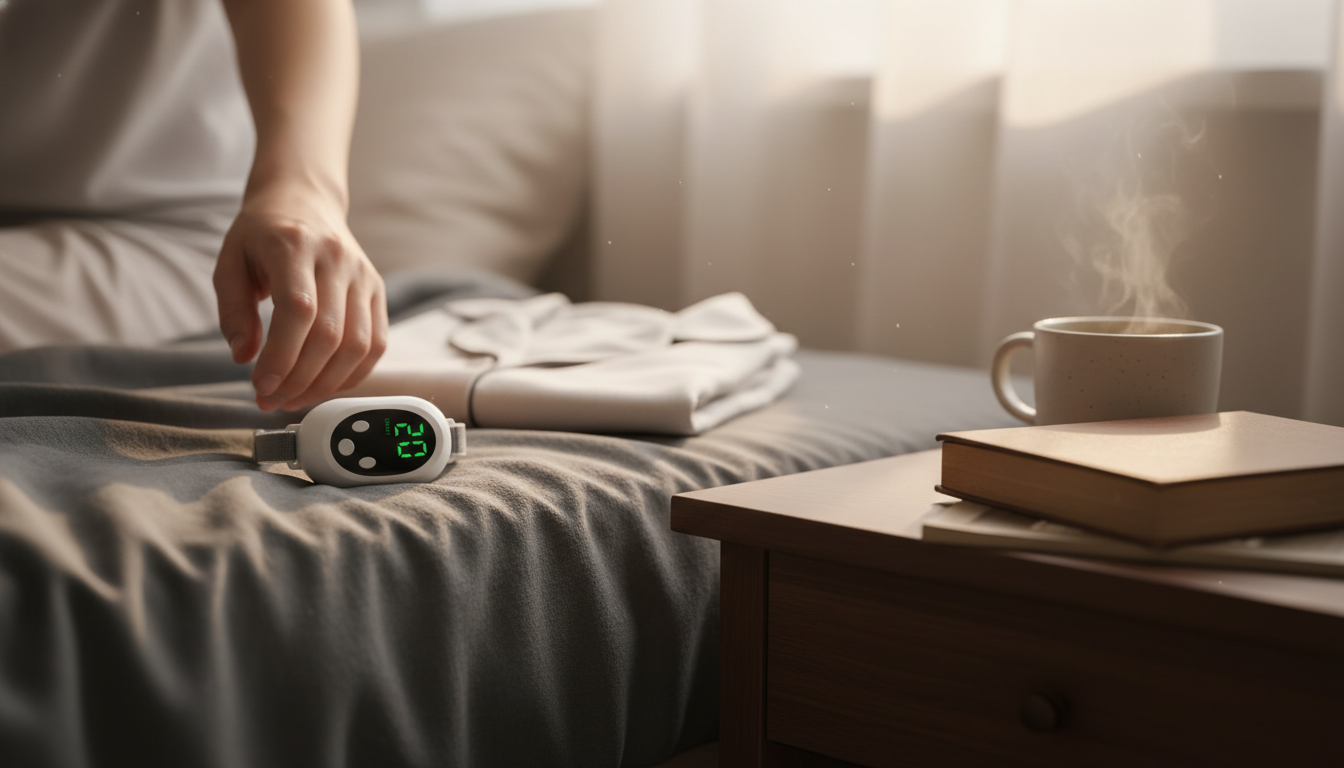
A wind-down routine works best when it’s simple, consistent, and comfortable. A microcurrent sleep aid wristband combines gentle stimulation with a 20-level EMS-style hand-massager design to help ease end-of-day tension, support relaxation, and make it easier to settle into bed—especially after long hours of typing, scrolling, crafting, or repetitive hand work. The goal isn’t to “knock you out.” It’s to create a steady, soothing pre-sleep cue that helps the body shift from doing mode to rest mode.
This device is a wearable wristband-style relaxer designed for evening comfort, with adjustable stimulation intended to feel subtle and calming. It’s made for short sessions you can repeat nightly—without adding a complicated checklist to bedtime.
If your evenings often end with stiff hands, a tight grip on your phone, or that lingering “buzz” from a full day of tasks, a short stimulation session can be a practical bridge between activity and sleep.
Low-level electrical stimulation is commonly used in consumer wellness devices to encourage relaxation and muscle comfort. It’s also a powerful behavioral tool: the same simple steps done nightly become a cue that bedtime is approaching.
For a plain-language overview of how electrical stimulation is used and what it’s generally for, see the Cleveland Clinic’s explainer on electrical stimulation (e-stim).
Not all stimulation wearables feel the same. Comfort and simplicity matter more at night than extra modes you’ll never use.
For broader sleep hygiene guidance (light, routine, and consistency), the National Heart, Lung, and Blood Institute offers practical tips on healthy sleep.
A microcurrent/EMS-style wristband is designed for quick, repeatable evening sessions—ideal beside the couch, bedside table, or even at your desk before you shut everything down for the night. The hand-focused comfort also pairs well with calming habits like warm tea, journaling, or light stretching.
To keep the experience sleep-friendly, aim for a quiet, dim environment and avoid pairing the session with stimulating content. Treat it like a gentle “off-ramp” from your day.
| Feature | Why it matters at night | Practical tip |
|---|---|---|
| 20 intensity levels | Helps find a comfortable setting without overdoing it | Begin at the lowest level for the first 2–3 sessions |
| Wristband fit | Comfort affects whether the routine sticks | Fit snug but not tight; remove if numbness/tingling persists |
| Hand-massager focus | Targets end-of-day hand and wrist tension | Use after typing-heavy days or repetitive tasks |
| Short set sessions | Creates a predictable wind-down cue | Pair with 5 minutes of slow breathing afterward |
| Easy cleaning | Better skin comfort and consistent contact | Wipe contact areas after use; keep skin dry |
A calm setup makes a bigger difference than cranking intensity. Aim for “barely there, but soothing.”
For signs, causes, and when to talk to a professional, Mayo Clinic’s overview of insomnia is a helpful reference.
Aim for a gentle, comfortable sensation. Start at the lowest level and increase gradually; avoid settings that cause pain, strong twitching, or lingering numbness.
No—treat it as a relaxation aid that supports a bedtime routine, not a substitute for prescribed treatment. If sleep problems persist, a healthcare professional can help identify underlying causes and appropriate options.
Follow the device guidance; many people prefer short nightly sessions. If irritation or discomfort shows up, reduce frequency, reassess fit and intensity, or stop use.









Leave a comment